
Subtotal:
$0.00


 Trusted
By 500+ U.S. Healthcare Providers
Trusted
By 500+ U.S. Healthcare Providers
Custom Care Coordination Software Built to Connect Every Care Point
Unify care teams, workflows, and patient data into one coordinated care experience—built around how your organization actually delivers care.



Trusted by 150+ US Industry Leaders, From Innovative Start-Ups to NASDAQ Giants






Proven Results from Modern Care Coordination Software
Real Results from Healthcare Organizations Using A&I’s Care Coordination Software

35%
Fewer Care Handoff Delays

25%
Reduction in Avoidable Readmissions

$180,000
Avg. Annual Revenue Increases

99%
System Uptime guarantee
What Sets A&I Apart in Software for Care Coordination
Built to support complex care workflows, shared visibility, and seamless coordination across teams.


Workflow-First Design
Built around how CCM, RPM, and care teams actually coordinate.
Unified Care Visibility
Shared care plans, tasks, notes, and updates in one coordinated workspace.
Seamless Care Transitions
Smooth handoffs across CCM, RPM, home health, and in-clinic care.
Interoperability by Design
Integrates cleanly with EHRs, labs, billing, and third-party systems.
Generic Care Coordination Software
-
Template-driven workflows
Forces teams to adapt to the software instead of the other way around.
-
Fragmented care visibility
Data scattered across modules, tools, or manual workarounds.
-
Unclear task ownership
Missed handoffs and follow-ups due to poor accountability design.
-
Disjointed care transitions
Weak coordination between programs and care settings.
-
Limited or rigid integrations
Slow, partial, or vendor-dependent interoperability.
-
Vendor-controlled customization
Changes require support tickets, delays, or paid add-ons.
Seamlessly Align CCM, RPM, and Home Health with One Care Coordination Platform
Bring every care team onto one platform with shared visibility, clear ownership, and smooth handoffs.
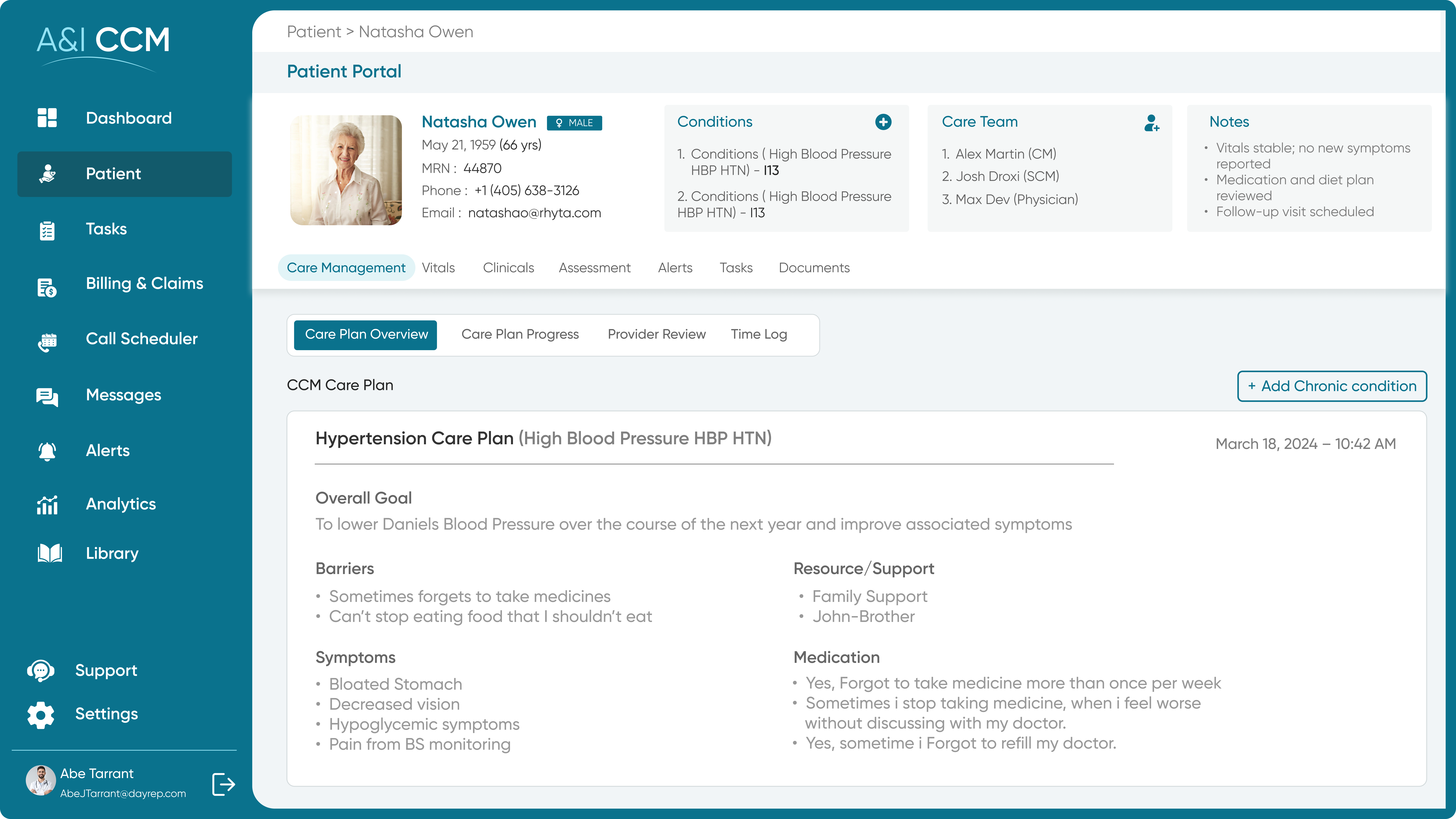
Chronic Care Management (CCM) Software
Enable seamless long-term chronic care management with care coordination software that centralizes patient records and monitoring to keep care teams and patients consistently engaged.
- Digital patient consent management
- HIPAA-compliant CCM software
- Personalized care plan creation
- Automated CPT code tracking
- Optimized revenue cycle workflows

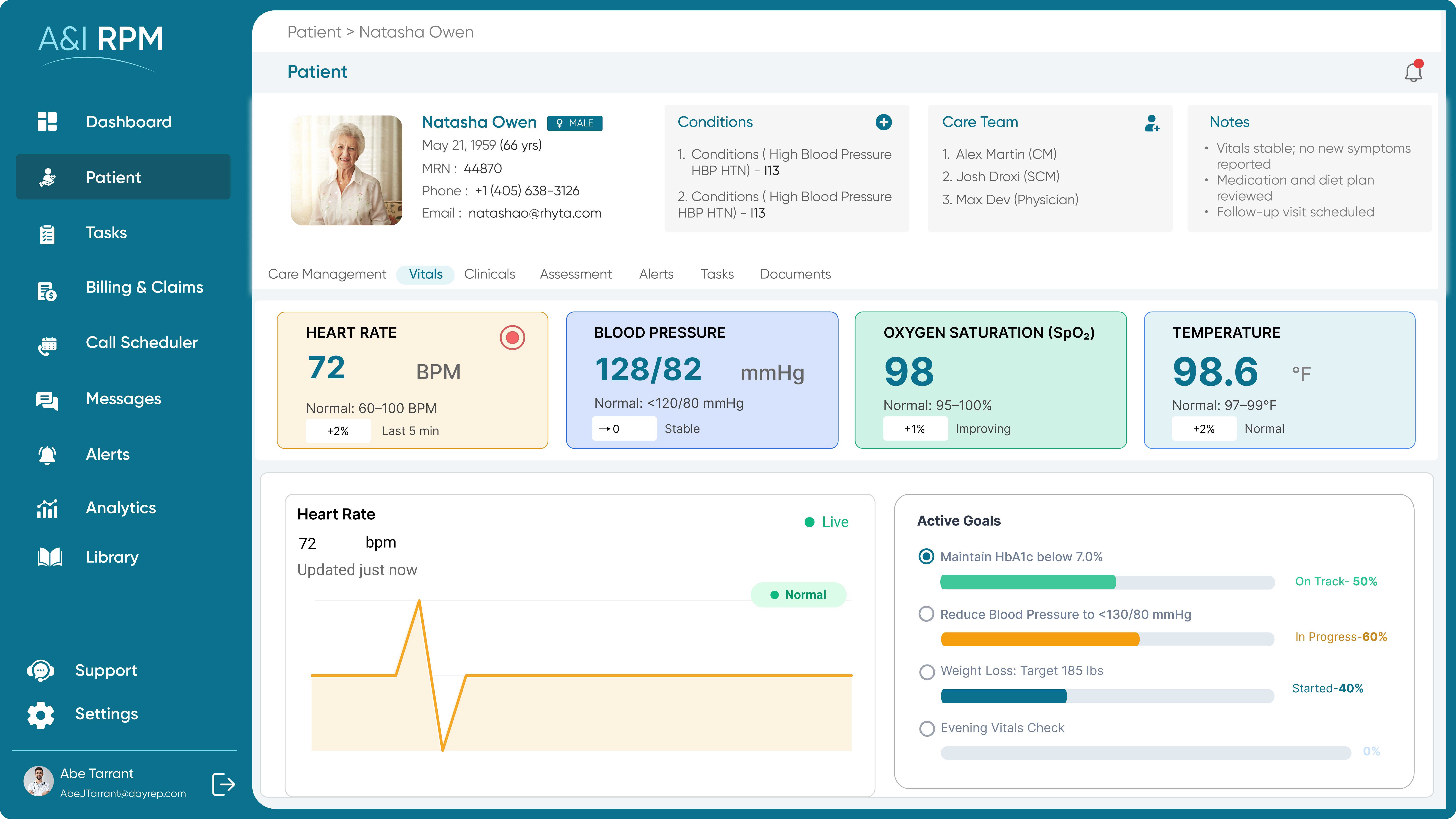
Remote Patient Monitoring Software & Solutions
Integrate remote patient data directly into care coordination workflows, enabling real-time clinician alerts and continuous vital monitoring without gaps.
- Wearable and Medical Device Integration
- Real-Time Vital Monitoring and alerts
- Centralized RPM dashboards for care teams
- Cloud-based data processing and storage
- Administrative control and device management
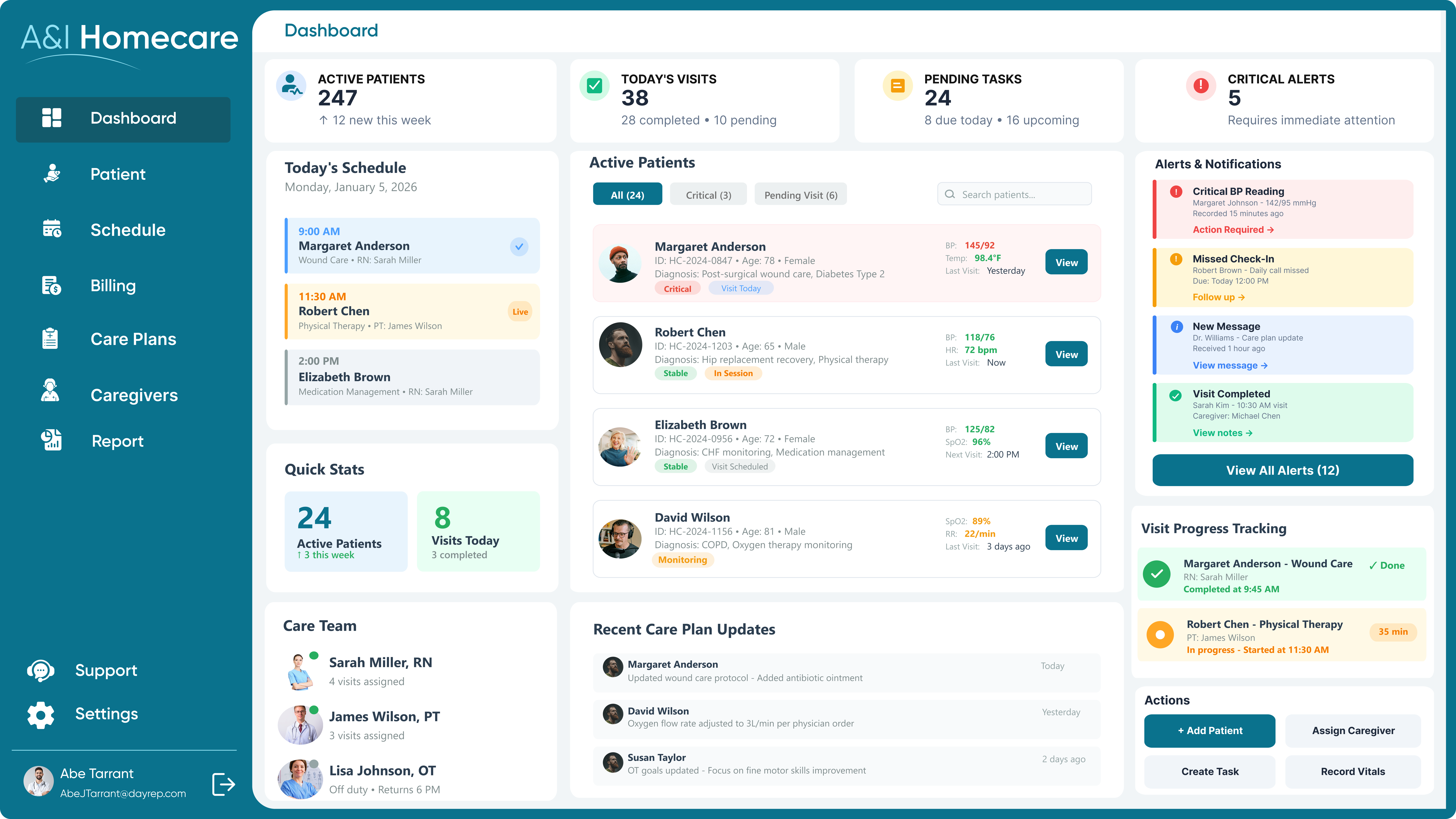
Home Health Care Software
Enable coordinated, in-home care delivery with software that connects field caregivers, care coordinators, and clinical teams through shared schedules, real-time updates, and seamless data exchange.
- Intelligent appointment scheduling and routing
- Optimized caregiver–patient matching
- Mobile-first access for field staff
- Seamless EHR and care workflow integration
- Secure data exchange across care settings
What Care Teams Say About Our Patient
Care Coordination Software
Real feedback from healthcare teams managing coordinated, multi-program care with A&I.

Care Coordination Finally Feels Clear and Controlled
"Care coordination used to mean juggling spreadsheets, emails, and disconnected systems across CCM, RPM, and home health. A&I gave us one platform where every task, update, and care plan is visible and owned. Handoffs are smoother, nothing slips through the cracks, and our teams finally work in sync.” Show More
Lakeside Medical Group, Ohio
From Fragmented Workflows to One Coordinated System
“We struggled with missed follow-ups and unclear ownership between teams. With A&I’s care coordination software, everything—from tasks to documentation—lives in one place. Our coordinators know exactly what needs attention, and clinicians stay informed without extra effort. Coordination now feels intentional rather than reactive. ” Show More
Horizon Health Partners, Texas
Care Transitions Are No Longer a Risk Point
“Transitions between programs were our biggest challenge. A&I helped us centralize care plans, communication, and accountability across teams. Whether it’s CCM, RPM, or post-discharge care, everyone stays aligned. We’ve seen fewer delays and far better continuity of care. ” Show More
Riverbend Care Network, Illinois
One Platform That Actually Supports Team-Based Care
“Most tools claim to support coordination, but they still leave teams working in silos. A&I’s platform was different. Tasks, notes, and updates are shared in real time, and audits are easier because everything is documented automatically. It finally supports how coordinated care should work. ” Show More
Evergreen Home Health Services, California
Proven Results Across Coordinated Care Programs
How healthcare organizations are improving outcomes, efficiency, and revenue with coordinated care.
Primary Care
Riverside Family Health Group
Challenge:
Coordinating CCM and RPM patients across multiple providers without shared visibility led to missed follow-ups and inconsistent documentation.
Results:
- Reduced care coordination overhead across CCM and RPM
- Improved follow-up completion rates
- Increased accuracy in time tracking and billing
Patients Coordinated
900+
Annual CCM & RPM Revenue
$240K+
Care Coordination Time
-42%
"Before A&I, our teams worked in silos and relied on manual tracking to manage patient outreach. Care coordination felt reactive. A&I centralized everything—tasks, alerts, and documentation—so our care teams stay aligned and patients receive timely, consistent care. "

Multi-Provider Practice
Northbridge Internal Medicine
Challenge:
Managing CCM patients alongside home health partners was difficult due to disconnected systems and poor care transition visibility.
Results:
- Streamlined handoffs between clinic and home health teams
- Reduced missed care activities
- Improved continuity across care settings
CCM Patients
780+
Annual Care Program Revenue
$195K+
Administrative Effort
-38%
"Care transitions used to be our weakest point. With A&I, care plans, updates, and tasks are shared in real time. Our teams now coordinate confidently across programs instead of chasing updates. "

Value-Based Care Organization
Willow Creek Medical Network
Challenge:
Scaling coordinated care programs across CCM, RPM, and home health increased operational complexity and audit risk.
Results:
- Centralized documentation and task ownership
- Improved audit readiness
- Better care plan adherence across teams
Patients Managed Across Programs
1,200+
Annual Coordinated Care Revenue
$510K+
ocumentation Time
-46%
"We needed a system that could scale with our care model. A&I gave us one coordinated platform where every care activity is tracked, visible, and auditable. It’s made both compliance and care delivery far more manageable. "

Primary Care + Home Health
Summit Home & Primary Care Services
Challenge:
Home health visits, CCM activities, and follow-ups were managed separately, leading to duplicated work and missed updates.
Results:
- Unified scheduling and care plans
- Reduced duplication between teams
- Improved patient engagement across programs
Patients Coordinated
650+
Annual Care Program Revenue
$160K+
Coordination Effort
-40%
"Before A&I, home health and clinic teams worked independently. Now, everyone sees the same care plan and updates in real time. Coordination feels intentional instead of chaotic. "

Build a Care Coordination Platform That Connects Every Care Point
Unify CCM, RPM, and home health workflows into one coordinated care experience.
Frequently Asked Questions
Q. What is care coordination software, and why is it important in healthcare?
Care coordination software helps healthcare teams organize tasks, share information, and manage patient care across settings. It’s important because it reduces care gaps, improves collaboration, and ensures patients receive timely, continuous care.
Q. How does care coordination software improve patient care and outcomes?
With care coordination software, teams gain visibility into care plans, tasks, and patient status, ensuring nothing is missed. This leads to faster interventions, better follow-ups, improved adherence, and more consistent patient outcomes.
Q. Who can benefit most from using care coordination software?
Primary care practices, care management teams, hospitals, home healthcare providers, and organizations managing CCM, RPM, or post-discharge care benefit most—especially those juggling multiple teams, locations, or complex patient populations.
Q. How does care coordination software support patient care coordination across teams?
It centralizes tasks, timelines, and patient information so everyone works from the same system. Clear ownership, role-based access, and real-time updates help teams coordinate efficiently without relying on emails or manual tracking.
Q. How does care coordination software help reduce hospital readmissions?
The software ensures timely follow-ups, medication reviews, patient outreach, and post-discharge escalation alerts. By closing care gaps early and monitoring patient progress, teams can prevent complications that often lead to readmissions.
Q. What are the key benefits of care coordination software for healthcare providers?
Providers gain better visibility, reduced administrative burden, more transparent accountability, improved care continuity, and more efficient workflows—allowing teams to focus less on coordination logistics and more on delivering quality patient care.
Q. How does care coordination software improve communication between care teams?
It replaces scattered emails and calls with shared dashboards, task updates, and notifications. Everyone sees the same information in real time, reducing miscommunication, delays, and confusion between clinical, administrative, and care management teams.
Q. Can care coordination software work alongside an existing EHR system?
Yes. Care coordination software is typically designed to integrate with existing EHRs, syncing patient data and updates while handling coordination workflows separately. So teams avoid duplicate work and maintain a single source of truth.
Q. How does care coordination software support post-discharge and follow-up care?
It automates follow-up tasks, tracks patient outreach, monitors milestones, and flags issues early. This ensures patients receive proper support after discharge and helps care teams stay proactive during recovery and transitions of care.
Q. Is care coordination software secure and compliant with healthcare regulations?
Yes. Well-designed care coordination software adheres to HIPAA standards, employs role-based access controls, maintains audit logs, and ensures secure data handling to protect patient information and support regulatory compliance across care programs.
Q. Can care coordination software be customized for different healthcare workflows?
Absolutely. Custom care coordination software can be tailored to specific care models, team roles, patient populations, and operational needs—ensuring workflows match how care is actually delivered, not how generic software dictates.
Q. How should healthcare organizations choose the right care coordination software?
Organizations should evaluate workflow fit, integration with existing systems, customization flexibility, scalability, compliance readiness, and vendor healthcare expertise—focusing on long-term coordination needs rather than short-term feature checklists.