Essential Custom EHR Features Healthcare Organizations Need in 2026
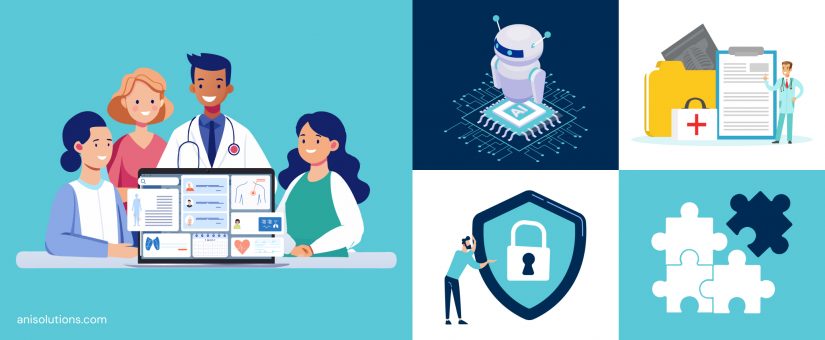
Today, EHRs are no longer what they used to be in the early 2000s or even a decade ago. They are now intelligent platforms that actively guide care, automate workflows, and support modern care delivery.
This whole shift did not happen suddenly. The main catalyst for this 2010s ‘Meaningful Use’ era where organizations widely adopted EHRs and moved towards structured data, along with interoperability. While this strengthened the compliance side, it also exposed the limitations in the efficiency and outcomes side.
However, even this changed with the integration of AI, automation, and predictive analytics. Today, EHRs are expected to reduce clinicians’ burden, enable proactive care, and adapt to how clinics work. And all of this makes deciding what features a customizable EHR should include in 2026 a critical decision.
Because not every feature that looks essential actually is, choosing the wrong ones leads to bloated EHRs that slow clinicians down instead of supporting care.
That’s why, to help you choose only the must-have features, we have created a guide for the essential features of a custom EHR in 2026. While no single system includes everything, these are the key EHR features for modern healthcare to prioritize this year.
So, let’s break down essential clinical and administrative EHR features along with AI-powered EHR features in 2026!
What Makes a Feature Truly Essential in a Custom EHR?
In modern EHR development, a successful EHR is not defined by how many features are in your system. In fact, feature-heavy EHRs are often the least effective. What truly matters is whether each feature actively supports clinical workflows, operational efficiency, and long-term scalability. In a custom EHR, an essential means a feature with value, not just impressive on a demo screen.
- Why Feature Volume No Longer Defines EHR Success
For years, EHR vendors competed by adding more modules, more screens, and more configuration options. The result is a bloated system that increases documentation time, slows clinicians down, and forces teams to work around the software instead of with it. In 2026, healthcare organizations are prioritizing fewer but smarter features that deliver consistent value in daily use.
- Generic Capabilities vs Custom-Built EHR Features
Generic EHR systems are designed to serve everyone, which means they rarely fit anyone perfectly. Their features are built for broad compliance, not for how individual clinics operate. Custom EHR features, on the other hand, are designed around real workflows. You can design the systems to match how data is captured, how care teams collaborate, and how decisions are made in your practice. This alignment is what turns features into productivity enablers rather than obstacles.
- How Essential Features Are Evaluated
In a custom EHR, a feature earns its place based on three core criteria:
A) Frequency of Real-World Use: If clinicians or staff rarely use it, it’s not essential, no matter how advanced it looks.
B) Clinical & Operational Impact: Essential features reduce cognitive load, speed up workflows, improve care coordination, or directly support outcomes and revenue.
C) Compliance & Future Scalability: Features must support evolving regulations, interoperability standards, and growth without requiring constant rework.
When features meet all three criteria, they stop being optional enhancements and become foundational to EHR success.
Custom EHR Features Evaluation Framework (2026)
Click HereMust-Have Clinical Features in a Modern EHR
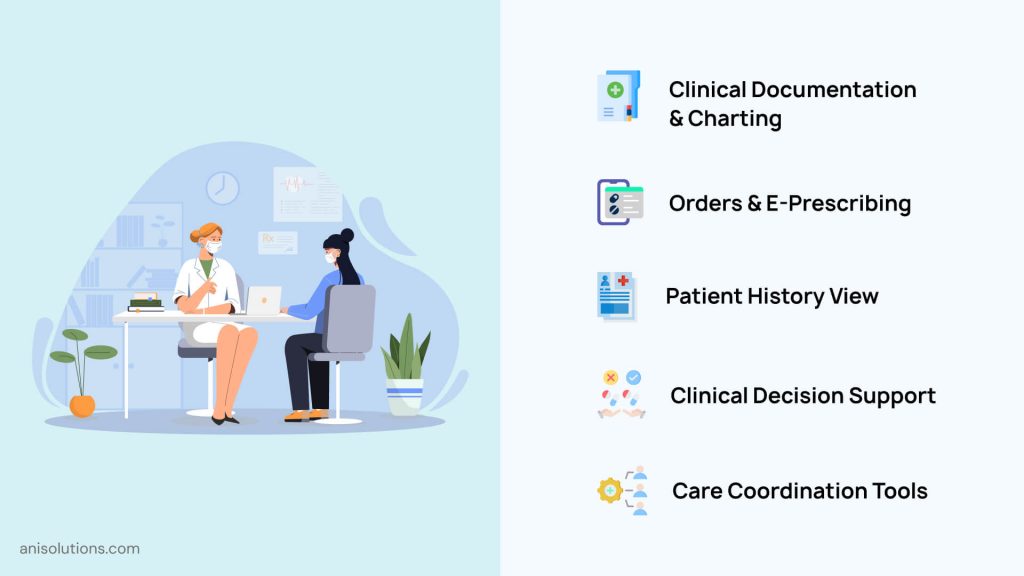
When evaluating essential custom EHR features for 2026, clinical functionality must come first. A modern EHR should support safe, efficient care delivery without sacrificing efficiency and adding documentation burden. These must-have EHR features for 2026 form the clinical foundation every custom system should include.
- Clinical Documentation & Charting
Clinical documentation remains the backbone of any EHR, but modern systems must go beyond static data entry. Essential features in a custom EHR include structured charting, specialty-aware templates, and support for AI-assisted documentation. The goal is accuracy without disruption—allowing clinicians to document efficiently while maintaining clinical integrity and compliance.
- Order Management & E-Prescribing
Another essential feature is order management for modern healthcare to ensure every lab order or prescription is processed safely and efficiently. Moreover, computerized provider order entry (CPOE), integrated e-prescribing, and real-time clinical decision support are used to reduce errors. Furthermore, custom EHRs must also support seamless lab, imaging, and pharmacy integrations to avoid delays and manual follow-ups.
- Longitudinal Patient Views for Better Clinical Context
One of the most overlooked yet essential clinical EHR features is a unified longitudinal patient view. Clinicians need quick access to historical diagnoses, medications, labs, care plans, and external records in a single timeline. This broader clinical context supports better decision-making, especially for chronic and complex patients.
- Care Coordination Across Clinical Teams
Modern care is team-based, and EHRs must reflect that reality. Key EHR features for modern healthcare include shared care plans, internal messaging, task assignment, and role-based access. Custom-built EHR features enable smoother handoffs, reduce duplication, and ensure continuity of care across providers, locations, and care settings.
Why Usability & Speed Drive Clinician Adoption?
Even the most advanced EHR features fail if they slow clinicians down. If the EHR has poor usability, excessive clicks, and lag, it increases cognitive load and burnout. Essential custom EHR features in 2026 must prioritize speed and intuitive design to ensure consistent clinician adoption and efficient care delivery.
If you want a deeper breakdown of what truly qualifies as a clinical must-have, explore our detailed guide on Must-Have Clinical Features in a Modern EHR.
AI-Powered EHR Features That Improve Outcomes
In 2026, AI is no longer an add-on or experiential module—it is becoming a native layer within modern EHR systems. When implemented correctly, AI-powered EHR features in 2026 enhance clinical efficiency, support decision-making, and improve outcomes without disrupting existing workflows. The key is using AI to assist, not override clinical judgement.
- AI-Assisted Documentation
One of the most practical and widely adopted AI-powered EHR features is AI-assisted documentation. These tools help summarize encounters, structure clinical notes, and reduce manual data entry. In an essential custom EHR, AI documentation supports accuracy and completeness while allowing clinicians to stay focused on patient interactions rather than screens.
- Predictive Alerts & Risk Identification
Predictive analytics enable EHR systems to identify potential risks before they escalate. From identifying a serious patient to highlighting medication risks or care gaps, AI-driven alerts provide timely insights. When embedded thoughtfully, these modern EHR features for healthcare support proactive care without overwhelming clinicians with unnecessary notifications.
- Intelligent Task & Workflows Prioritization
AI can also optimize how work flows through clinical teams. By analyzing patient data, care plans, and operational signals, AI-powered EHRs help prioritize tasks, surface urgent actions, and reduce delays. These essential custom EHR features improve coordination while minimizing manual tracking and follow-ups.
Why AI Must Enhance Workflows without Disrupting Clinical Judgement?
The most effective AI-powered EHR features operate quietly in the background. They surface insights, automate low-value tasks, and support decisions without replacing clinicians’ expertise. In 2026, healthcare organizations should prioritize AI that enhances trust, transparency, and workflow alignment, ensuring technology strengthens care delivery rather than complicating it.
To understand how AI is practically transforming patient care, not just automating documentation, read our in-depth blog: AI-Powered EHR Features That Improve Outcomes.
Billing & Administrative Features That Reduce Workload
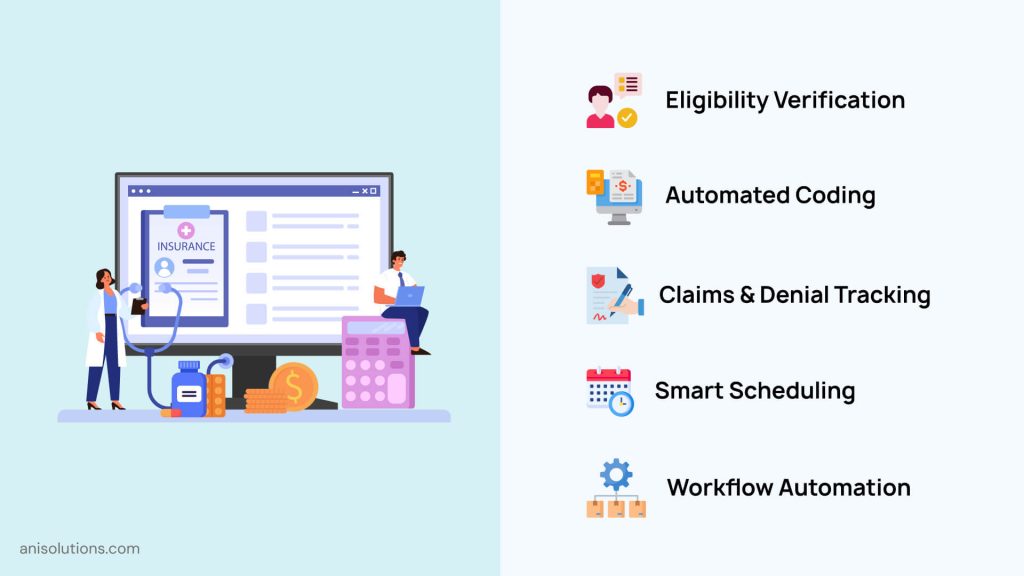
While clinical workflows often get the most attention, administrative complexity remains one of the leading causes of burnout in healthcare organizations. Excessive manual processes, fragmented billing tools, and disconnected scheduling systems increase operational strain and pull clinicians away from patient care. In 2026, essential custom EHR features must address these administrative challenges head-on.
- Eligibility Verification and Automated Coding
Manual eligibility checks and coding errors continue to slow revenue cycles and increase denials. Must-have EHR features for 2026 include real-time eligibility verification, automated charge capture, and intelligent coding support. These features reduce rework, improve billing accuracy, and ensure services are documented and reimbursed correctly from the start.
- Claims and Denial Management
Claims processing is no longer just a billing function—it’s a critical operational workflow. Modern EHR features for healthcare must support automated claims submission, denial tracking, and root-cause analysis. Custom-built EHR features allow organizations to identify patterns, fix issues early, and reduce revenue leakage without relying on external tools or manual audits.
- Smart Scheduling and Workflow Automation
Scheduling inefficiencies ripple across the entire care delivery process. Intelligent scheduling, automated reminders, and workflow automation help reduce no-shows, balance clinician workloads, and streamline daily operations. These essential administrative EHR features improve coordination while freeing staff from repetitive, low-value tasks.
How Administrative Efficiency Improves ROI and Clinician Satisfaction
When administrative workflows run smoothly, the impact is felt across the organization. Faster reimbursements, fewer denials, and reduced manual effort directly improve ROI. At the same time, clinicians benefit from fewer interruptions, cleaner documentation, and better support—leading to higher adoption, satisfaction, and long-term sustainability.
For a deeper dive into how smart billing, automated coding, and workflow optimization reduce operational strain, explore: Billing & Admin Features That Reduce Workload.
Designing Specialty-Specific EHR Modules
Generic EHR workflows are designed to serve the broadest possible audience. While that approach works for basic documentation, it often fails in specialty-driven care models where workflows, data needs, and clinical priorities vary significantly.
In 2026, modern EHR design must go beyond one-size-fits-all functionality and support specialty-specific modules built around how care is actually delivered.
- Why Generic Workflows Fall Short in Specialty Care
Specialty practices operate with unique documentation requirements, clinical protocols, and care pathways. Generic EHR workflows force these practices to adapt their processes to rigid system designs, leading to workarounds, incomplete documentation, and inefficiencies. Over time, this mismatch increases cognitive load and reduces clinician adoption.
- How Modular EHR Design Supports Specialty Needs
A modular EHR architecture allows healthcare organizations to build and deploy specialty-specific functionality without overloading the core system. Essential custom EHR features in 2026 include modular documentation templates, configurable data capture, and role-based workflows tailored to specialty care teams. This approach ensures clinicians see only what’s relevant to their role, improving speed, usability, and accuracy.
- Customization Without System Sprawl
One of the biggest risks of customization is system sprawl—adding too many features that complicate the user experience. Modular design avoids this by isolating specialty functionality within defined modules while keeping the core EHR streamlined. Updates, compliance changes, and integrations can be managed centrally without disrupting specialty workflows.
Specialties That Benefit Most from Modular EHR Design
Specialty-specific EHR modules deliver the greatest value in care models with complex documentation and coordination needs, including cardiology, oncology, behavioral health, orthopedics, and multi-specialty group practices. For these organizations, modular design is not optional—it’s essential for scalability, efficiency, and long-term system adoption.
If you’re planning a modular expansion or building specialty-ready systems, read our full guide on Designing Specialty-Specific EHR Modules.
Specialty-Wise EHR Features Mapping Guide
Get NowInteroperability As the Backbone of Connected Care
Interoperability is no longer a standalone EHR capability. In 2026, it is the foundation that enables every modern clinical, administrative, and AI-driven feature to function effectively. Without seamless data exchange, even the most advanced EHR systems operate in silos, limiting care coordination and continuity.
- FHIR-Based APIs for Scalable Connectivity
FHIR-based APIs have become the standard for modern EHR interoperability. They allow healthcare organizations to exchange data securely and consistently across EHRs, labs, imaging systems, pharmacies, and third-party platforms. Unlike rigid legacy integrations, FHIR supports scalability and future regulatory changes without requiring system overhauls.
- Real-Time Data Exchange Across Care Settings
Modern care depends on timely information. Real-time data exchange ensures clinicians have immediate access to lab results, medication updates, and external encounter data. This is especially critical for chronic care, transitions of care, and high-risk patients, where delayed information can directly impact outcomes.
- Integration with Labs, Devices, and External Platforms
Interoperability now extends beyond traditional healthcare systems. Essential custom EHR features in 2026 include integrations with medical devices, remote monitoring tools, care coordination platforms, and patient engagement systems. These integrations enable longitudinal care without forcing teams to rely on disconnected portals or manual reconciliation.
Enabling Continuity of Care and Team Collaboration
When interoperability is built into the EHR’s core architecture, care teams collaborate more effectively. Information flows across providers and locations, handoffs improve, and duplication is reduced. In 2026, interoperability is not optional—it is the backbone of connected, patient-centered care.
Security, Privacy & Compliance as the Foundation of Trust
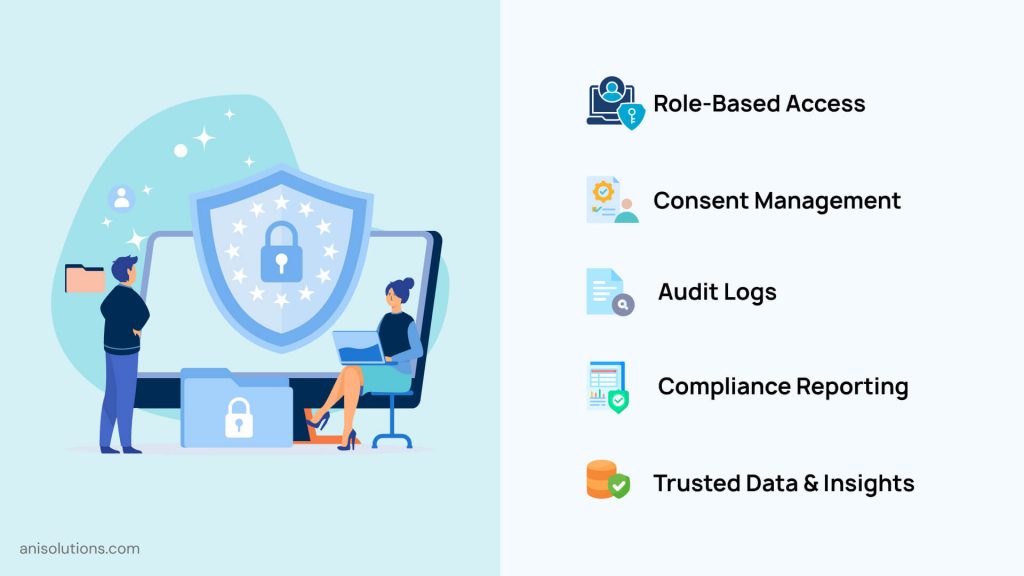
As EHR systems become more interconnected and data-driven, security and compliance are no longer backend considerations. They are fundamental requirements that enable adoption, interoperability, and intelligent decision-making. In 2026, healthcare organizations must treat trust as a design principle, not an afterthought.
- Role-Based Access and Consent Management
Modern EHRs must enforce granular role-based access to ensure users only see the data necessary for their responsibilities. Combined with dynamic consent management, this protects patient privacy while supporting care coordination across teams and settings.
- Audit Logs and Compliance-Ready Reporting
Built-in audit logs are essential for transparency and regulatory readiness. Custom EHRs should automatically track data access, modifications, and sharing activities, enabling organizations to meet HIPAA and other compliance requirements without manual reporting or external tools.
- Secure Data Storage and Transmission
Data security extends across the entire EHR ecosystem. Encryption at rest and in transit, secure authentication, and resilient infrastructure protect sensitive health information as it moves between systems. In interoperable environments, consistent security standards prevent weak points from undermining the entire platform.
Trusted Data Enables Reliable Insights
Security and compliance directly influence data quality and trust. When clinicians and leaders trust the integrity of EHR data, they are more likely to adopt advanced features, rely on analytics, and use AI-driven insights. In this way, strong security doesn’t slow innovation—it enables it.
From Trusted Data to Actionable Insights
A modern EHR’s true value is realized when secure, interoperable data is transformed into actionable insights. In 2026, healthcare organizations are no longer satisfied with static reports or retrospective analysis. They need real-time visibility into clinical performance, operational efficiency, and outcomes embedded directly within the EHR.
- Embedded Analytics for Real-Time Visibility
Modern EHRs must include embedded analytics that surface insights directly within clinical and administrative workflows. Real-time dashboards provide immediate visibility into patient status, care delivery, and operational performance—allowing teams to respond quickly rather than relying on retrospective reports.
- Outcome-Driven KPIs and Population Trends
Outcome-driven KPIs help organizations measure performance against quality goals, reimbursement models, and care benchmarks. At the population level, analytics reveal utilization patterns, risk trends, and care gaps, supporting proactive interventions and better resource allocation.
- Usage Analytics That Inform EHR Optimization
Understanding how EHR features are actually used is critical. Usage analytics show which features deliver value and which create friction, enabling organizations to continuously refine workflows and prioritize enhancements based on real-world impact.
| Data Capability | Insight Generated | Impact |
| Real-time dashboards | Immediate operational and clinical visibility | Faster, informed decisions |
| Outcome-driven KPIs | Performance against care and cost goals | Improved value-based outcomes |
| Population health analytics | Risk stratification and utilization patterns | Proactive care management |
| Feature usage analytics | Feature adoption and effectiveness | Smarter EHR optimization |
2026 Custom EHR Feature Readiness Checklist
Get NowConclusion: Building a Future-Ready Custom EHR for 2026
In 2026, building a successful custom EHR is not about adding more features; it’s about choosing the right ones. Essential EHR features must align with real clinical and administrative workflows, support care teams with intelligent assistance, and integrate seamlessly across systems.
Moreover, interoperability, security, and compliance are no longer optional add-ons. They are the foundation that enables trust, scalability, and innovation. Equally important is specialty readiness, ensuring workflows adapt to how care is actually delivered.
Ultimately, EHRs succeed in 2026 when they actively support care delivery, decision-making, and outcomes, not when they simply record data. So, if you want to build a custom EHR that has all essential features for 2026, click here to connect with our team and build your own custom EHR.
Frequently Asked Questions
Q. What are the essential features of a custom EHR in 2026?
Essential features include workflow-aligned clinical documentation, interoperable data exchange, AI-assisted automation, specialty-specific modules, robust security controls, and embedded analytics. These features ensure efficiency, compliance, scalability, and real-world usability across modern care settings.
Q. How do custom EHR features differ from off-the-shelf EHR systems?
Custom EHR features are built around actual clinical and operational workflows, while off-the-shelf systems force organizations to adapt. Custom systems prioritize usability, flexibility, and integration instead of generic functionality designed for the broadest audience.
Q. What security and compliance features are non-negotiable for custom EHRs in 2026?
Non-negotiable features include role-based access control, consent management, detailed audit logs, encrypted data storage and transmission, and compliance-ready reporting. These safeguards protect patient data while enabling interoperability and advanced analytics without increasing risk.
Q. How does ambient AI in modern EHRs differ from traditional medical scribing tools?
Ambient AI integrates directly into EHR workflows, capturing and structuring documentation in real time. Unlike traditional scribing tools, it reduces manual effort without disrupting clinician workflows or requiring post-visit transcription and cleanup.
Q. Why is FHIR API compatibility critical for interoperability in custom EHR systems?
FHIR API compatibility enables standardized, scalable data exchange across EHRs, labs, devices, and external platforms. It ensures real-time interoperability, regulatory alignment, and future-proof integrations without relying on fragile, point-to-point connections.
Q. How can a custom EHR reduce clinician burnout through AI and workflow automation?
Custom EHRs reduce burnout by automating documentation, prioritizing tasks, minimizing clicks, and surfacing relevant insights at the right time. AI and workflow automation eliminate low-value work, allowing clinicians to focus more on patient care.
Q. What is the difference between a generic EHR and a specialty-specific EHR module?
Generic EHRs use standardized workflows that often don’t fit specialty care. Specialty-specific modules tailor documentation, workflows, and data views to unique clinical needs—improving efficiency, accuracy, and clinician adoption without overloading the system.
Q. How do AI-powered EHR features help improve patient outcomes?
AI-powered EHR features enable proactive care through predictive alerts, risk identification, and real-time insights. By supporting earlier interventions and better coordination, these tools help improve outcomes without replacing clinical judgment.
Q. What analytics capabilities should a modern EHR include to measure clinical and operational performance?
Modern EHRs should include real-time dashboards, outcome-driven KPIs, population health analytics, and feature usage tracking. These capabilities help organizations monitor performance, identify care gaps, and continuously optimize workflows and resource use.
Q. What ROI can healthcare organizations expect from switching to a custom AI-powered EHR?
Organizations can expect ROI through reduced administrative workload, fewer claim denials, faster reimbursements, improved clinician productivity, and higher adoption. Over time, custom AI-powered EHRs also reduce rework, scalability costs, and burnout-related turnover.
Essential features include workflow-aligned clinical documentation, interoperable data exchange, AI-assisted automation, specialty-specific modules, robust security controls, and embedded analytics. These features ensure efficiency, compliance, scalability, and real-world usability across modern care settings.
Custom EHR features are built around actual clinical and operational workflows, while off-the-shelf systems force organizations to adapt. Custom systems prioritize usability, flexibility, and integration instead of generic functionality designed for the broadest audience.
Non-negotiable features include role-based access control, consent management, detailed audit logs, encrypted data storage and transmission, and compliance-ready reporting. These safeguards protect patient data while enabling interoperability and advanced analytics without increasing risk.
Ambient AI integrates directly into EHR workflows, capturing and structuring documentation in real time. Unlike traditional scribing tools, it reduces manual effort without disrupting clinician workflows or requiring post-visit transcription and cleanup.
FHIR API compatibility enables standardized, scalable data exchange across EHRs, labs, devices, and external platforms. It ensures real-time interoperability, regulatory alignment, and future-proof integrations without relying on fragile, point-to-point connections.
Custom EHRs reduce burnout by automating documentation, prioritizing tasks, minimizing clicks, and surfacing relevant insights at the right time. AI and workflow automation eliminate low-value work, allowing clinicians to focus more on patient care.
Generic EHRs use standardized workflows that often don’t fit specialty care. Specialty-specific modules tailor documentation, workflows, and data views to unique clinical needs—improving efficiency, accuracy, and clinician adoption without overloading the system.
AI-powered EHR features enable proactive care through predictive alerts, risk identification, and real-time insights. By supporting earlier interventions and better coordination, these tools help improve outcomes without replacing clinical judgment.
Modern EHRs should include real-time dashboards, outcome-driven KPIs, population health analytics, and feature usage tracking. These capabilities help organizations monitor performance, identify care gaps, and continuously optimize workflows and resource use.
Organizations can expect ROI through reduced administrative workload, fewer claim denials, faster reimbursements, improved clinician productivity, and higher adoption. Over time, custom AI-powered EHRs also reduce rework, scalability costs, and burnout-related turnover.
- On January 27, 2026
- 0 Comment