
How to Build an EHR System: A Step-by-Step Guide
Well, if you are here, then most likely you are thinking about building your own EHR. And the reason might be your current system is not keeping up with your growth, or clinicians are clicking too much, or documentation is taking forever to complete.
Whatever the reason, one thing is clear, and that is off-the-shelf EHRs are not going to be enough to do the job in 2026. However, when you build your own EHR, especially one that fits your needs and the way you work, is not as simple as putting the features together.
Each and every choice you make during the custom EHR development process impacts the performance and success of your EHR. That’s why you need to go step-by-step when it comes to building an EHR from scratch.
The first step is to build a framework of what your practice needs and which issues you need to solve for your teams. From there, you can progress to each step thoughtfully, increasing both the success rate and efficiency of your custom EHR software.
Most importantly, a modern EHR has to do more than just store patient data. It must be interoperable with real-time data sharing, and what is crucial, you must follow a HIPAA-compliant EHR system development process.
That’s why we decided to create a roadmap for how to build an EHR that suits you step-by-step. I will walk you through each step, such as from early planning and design to deployment and long-term scaling and optimization.
So, let’s get answers to questions such as the cost to build an EHR system, how long it takes to build one, and the technologies used to build an EHR that works for you.
Step 1: Define the Purpose, Scope, & Users of Your EHR System
Before you think about architecture, features, or timelines, you need clarity. Defining the purpose, scope, and users of your EHR sets the direction for the entire EHR system development process. Without this foundation, even well-built systems struggle to deliver real clinical or operational value.
- Identify the healthcare setting and care model
Start by clearly defining where and how the EHR will be used. Is it designed for primary care, specialty clinics, behavioral health, or value-based care programs? Each care model has different workflow, documentation, and data exchange needs. This decision directly influences system design, integrations, and long-term scalability considerations in EHR systems.
- Define primary and secondary users
An EHR isn’t built for clinicians alone. Nurses, care coordinators, administrators, billing teams, and leadership all rely on the system in different ways. Defining who your primary and secondary users are—and what they need day to day—helps prevent usability gaps, workflow friction, and adoption issues once the system goes live.
- Align short-term needs with long-term goals
While building a custom EHR, paying attention to short-term goals such as documentation efficiency or billing accuracy is important. But when you build an EHR system step by step, you also need to plan for the future—analytics, interoperability requirements for EHR systems, automation, and growth. Aligning short-term priorities with long-term goals avoids costly redesigns later.
- Understand the risks of unclear scope
One of the biggest risks when building an EHR system from scratch is an unclear scope. Without defined boundaries, features keep expanding, timelines slip, and costs rise. A well-defined scope keeps development focused, supports realistic budgeting, and ensures the system delivers what it was originally built to solve.
If you want a clearer understanding of the groundwork required before development begins, read our blog on what you must prepare before developing an EHR system.
Step 2: Pre-Development Planning & Readiness
Once the purpose and scope are clear, the next step is making sure your organization is actually ready to build. Pre-development planning is where many EHR projects either gain momentum or quietly fall apart. This phase prepares your workflows, teams, and expectations before development begins.
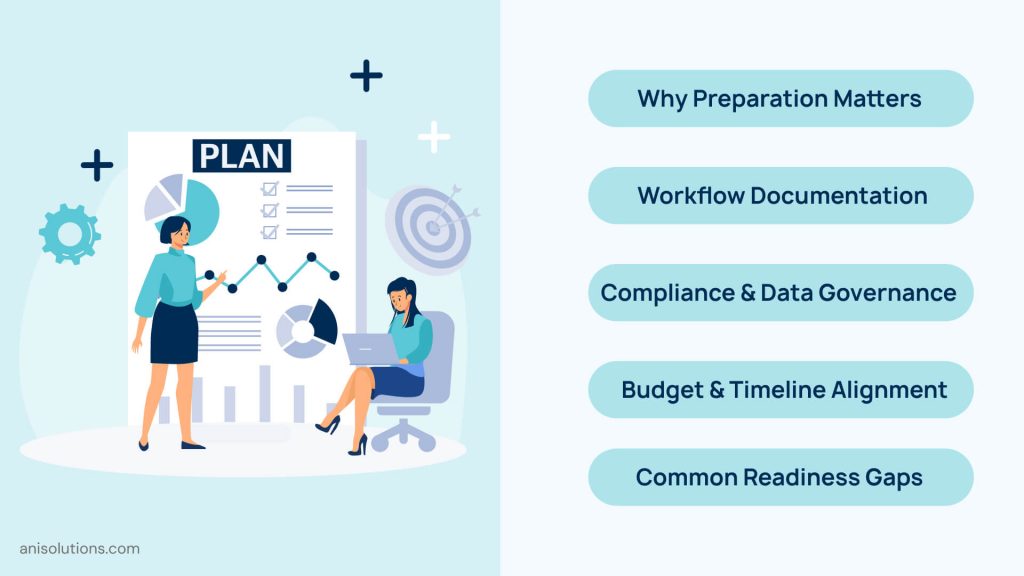
- Why preparation determines EHR project success
Strong preparation reduces uncertainty across the entire EHR software development lifecycle. When workflows, responsibilities, and priorities are defined early, teams spend less time fixing avoidable issues later. Organizations that skip this step often face rework, missed requirements, and delayed timelines—problems that quickly inflate the cost to build an EHR system.
- Workflow documentation and process clarity
Before designing anything new, document how clinical, administrative, and billing workflows actually function today. This helps identify inefficiencies the EHR should improve rather than replicate. Clear workflow documentation also ensures developers understand real-world usage, which is critical when building an EHR system step by step for long-term adoption.
- Compliance responsibility and data governance
HIPAA-compliant EHR system development requires clear ownership of data access, audit readiness, and security controls. During planning, organizations must define who governs patient data, approves permissions, and oversees compliance. Without this clarity, security requirements for EHR systems are addressed too late, creating regulatory and operational risk.
- Budget and timeline alignment
Early budget and timeline alignment prevents unachievable expectations. Development effort, clinician involvement, testing, training, and post-launch support all impact how long it takes to build an EHR system. Aligning leadership on these realities upfront helps teams make smarter prioritization decisions and avoid pressure to cut critical planning or testing phases.
- Common readiness gaps organizations overlook
Many healthcare organizations underestimate internal time commitments, data migration complexity, and interoperability requirements for EHR systems. Others assume vendors or developers will “figure it out later.” These readiness gaps slow progress and increase costs. Identifying them early keeps the EHR system development process predictable and controlled.
EHR Planning Worksheet: Define Scope, Users & Goals in 15 Minutes
Get NowStep 3: Design the EHR System Architecture
With planning complete, it’s time to design the technical foundation of your platform. EHR system architecture determines how reliable, secure, and scalable the system will be over time. Poor architectural decisions are difficult to fix later, which is why this step needs to be handled carefully with upfront attention to every factor.
- Define the core components of the EHR system
At a high level, EHR architecture includes data storage, application logic, user interfaces, integration layers, and security services. These components must work together seamlessly to support clinical workflows, reporting, and data exchange. A clear architectural blueprint ensures the system remains stable as users, data volume, and features grow.
- Choose between cloud-based & on-premises deployment
One of the biggest architectural decisions is the deployment model. Cloud-based EHRs offer flexibility, faster updates, and easier scalability, while on-premise systems provide greater infrastructure control. This choice impacts performance, security requirements for EHR systems, maintenance effort, and long-term scalability considerations in EHR systems.
- Design for performance & reliability
For EHRs, performance is a must, and architecture must support fast response times, high availability, and minimal downtime—especially during peak clinical hours. Designing for performance early prevents clinician frustration and workflow disruption, which are common complaints when systems are built without real-world usage patterns in mind.
- Plan for scalability from day one
Even if your organization is small today, the architecture should support future growth. Adding users, locations, data sources, and integrations should not require a complete rebuild. Planning scalability early protects your investment and ensures the system can evolve alongside changing care models and interoperability requirements for EHR systems.
Step 4: Build for Compliance, Security, and Interoperability
Compliance, security, and interoperability are not optional features—they are foundational requirements. When organizations rush past this step, they often face regulatory risk, security gaps, and integration failures later. That’s why these elements must be built into the system from the very beginning of the EHR system development process.
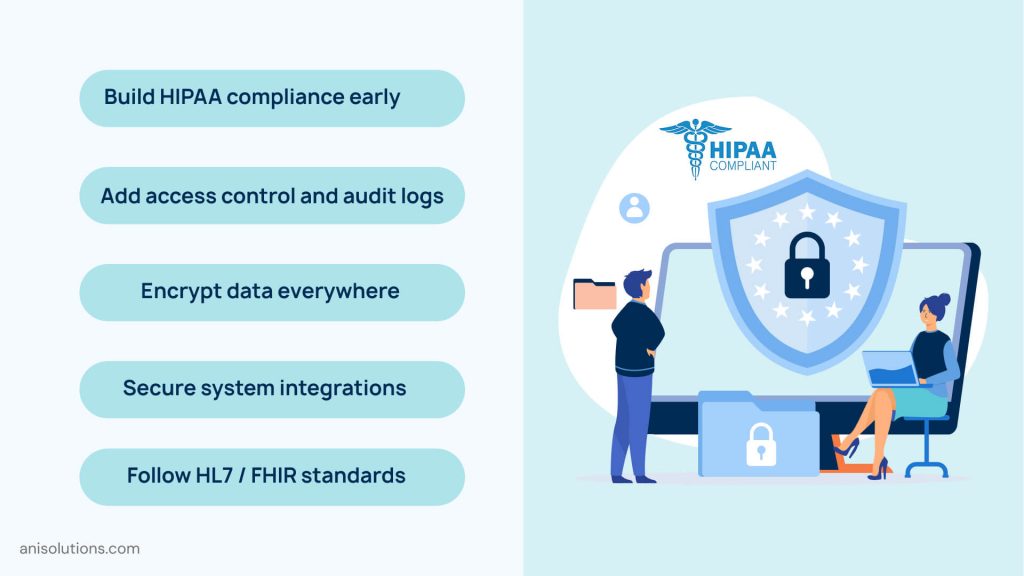
- Build regulatory compliance into the system from day one
HIPAA-compliant EHR system development requires more than policies—it requires technical safeguards embedded into workflows and architecture. Access controls, audit trails, and data handling rules must be designed upfront. Retrofitting compliance later is costly and risky, especially when systems already store sensitive patient data.
- Implement strong access control and security measures
Security requirements for EHR systems include role-based access, encryption of data at rest and in transit, and continuous activity logging. These controls ensure only authorized users have access to sensitive information. Strong security design protects patient trust while also supporting internal audits, incident response, and long-term regulatory readiness.
- Design for secure data exchange and integrations
Modern EHRs must exchange data with labs, pharmacies, imaging centers, and external providers. Designing for interoperability early ensures integrations don’t compromise system stability or security. Clear integration patterns reduce future development effort and support evolving interoperability requirements for EHR systems as networks expand.
- Align with healthcare interoperability standards
Using established healthcare data exchange standards improves compatibility with third-party systems and reduces integration friction. Standards-based design helps future-proof the platform and supports smoother collaboration across care settings. Ignoring these standards often leads to custom integrations that are expensive to maintain and difficult to scale.
HIPAA & Interoperability Readiness Guide for Custom EHRs
Read NowStep 5: Decide What to Build First — Feature Prioritization
One of the biggest mistakes teams make when learning how to build an EHR system is trying to build everything at once. This is where EHR feature prioritization keeps development focused, reduces risk, and helps organizations deliver value faster without overwhelming users or budgets.
Here are some strategies that will help you prioritize the essential features first:
- Understand why building everything at once increases risk
When too many features are developed simultaneously, complexity rises, and testing becomes harder. This often leads to delays, unstable releases, and rising costs. Building an EHR system step by step allows teams to validate core functionality early before investing in advanced features or automation.
- Separate core functionality from future enhancements
Core features support safe, compliant daily operations such as clinical documentation, orders, scheduling, and billing. Enhancements such as analytics, AI tools, or advanced reporting can follow later. This separation keeps the EHR software development lifecycle manageable and prevents unnecessary overengineering during early development phases.
- Plan phased releases to support adoption and stability
Phased releases allow users to adapt gradually while providing feedback that improves future iterations. This approach reduces disruption, improves user confidence, and strengthens system stability. It also aligns well with changing workflows and evolving interoperability requirements for EHR systems over time.
Note: To explore how healthcare organizations decide which EHR features to build first and which ones to defer, read our blog on EHR feature prioritization.
Step 6: Choose the Right Development Model
How you build your EHR is just as important as what you build. The development model you choose affects cost, timelines, control, and long-term support. Selecting the right approach early helps keep the EHR system development process realistic and sustainable.
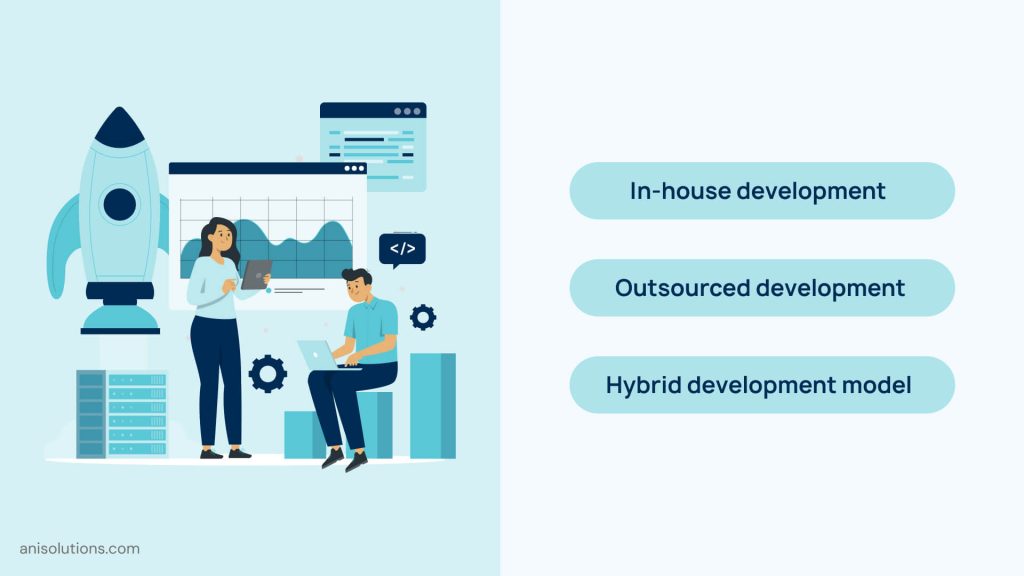
- Evaluate in-house EHR development
In-house development offers greater control over features, timelines, and system knowledge. However, it requires strong internal healthcare IT expertise, ongoing staffing investment, and the ability to manage compliance and security requirements for EHR systems long term. This approach works best for organizations with mature technical teams.
- Consider outsourced EHR development
Outsourcing provides access to specialized expertise and can accelerate how long it takes to build an EHR system. It often reduces upfront hiring costs but requires clear communication, strong governance, and well-defined requirements to avoid misalignment during development and testing.
- Explore hybrid development models
Hybrid models combine internal leadership with external execution. Organizations retain strategic control while leveraging external technical expertise. This approach often balances cost, speed, and quality—especially when building an EHR system from scratch with limited internal development bandwidth.
If you are still confused about what to choose, read this comparison of in-house vs. outsourced EHR development for a much more detailed answer and to help clear your doubts.
In-House vs Outsourced EHR Development: Decision Matrix
Click HereStep 7: EHR System Development, Testing, and Validation
This is where planning turns into a working system. Development and testing must move together to ensure the EHR performs reliably in real clinical environments. Skipping validation or rushing releases often leads to usability issues, compliance gaps, and post-launch disruptions.
- Follow a structured EHR software development lifecycle
A well-defined EHR software development lifecycle breaks development into manageable phases, allowing teams to build, review, and refine features iteratively. This approach reduces risk, improves quality, and supports better alignment between clinical needs and technical execution throughout the EHR system development process.
- Conduct functional and workflow testing
Functional testing ensures each feature works as intended, while workflow testing validates how different users interact with the system. Testing real-world scenarios helps identify bottlenecks and inefficiencies early, preventing clinician frustration and costly fixes after deployment.
- Perform security and compliance validation
Security testing verifies that access controls, encryption, and audit mechanisms function correctly. Compliance validation ensures the system meets HIPAA and internal governance requirements. These steps are critical for protecting patient data and maintaining trust when building an EHR system from scratch.
- Incorporate clinician feedback during testing
Clinician feedback provides insights that technical testing alone can’t uncover. Engaging users early helps refine usability, improve workflows, and increase adoption. This collaboration ensures the final system supports real clinical practice rather than theoretical use cases.
Step 8: Deployment, Training, and User Adoption
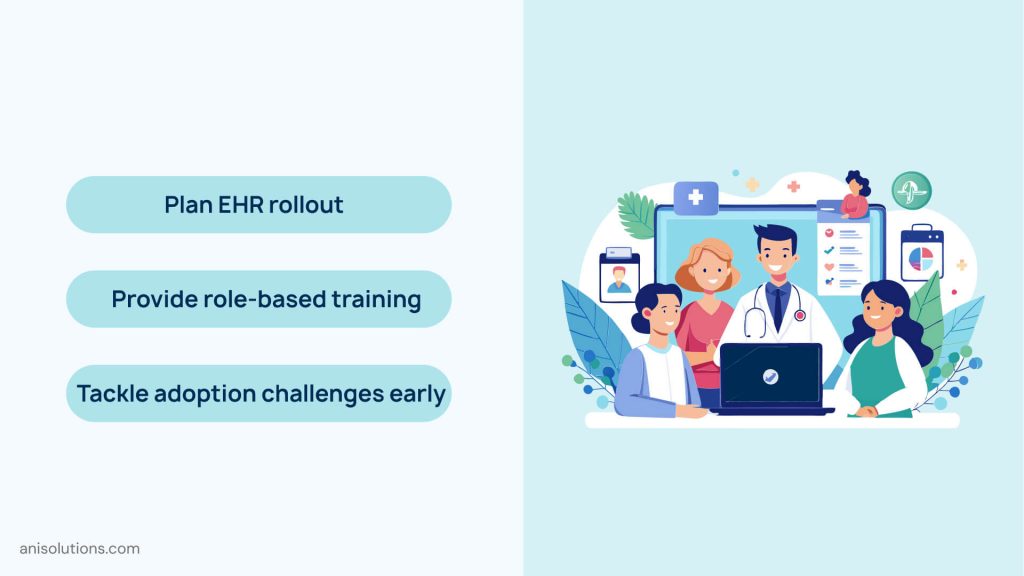
Even the most well-built EHR can struggle if deployment and training are rushed. This step focuses on introducing the system in a way that minimizes disruption and builds user confidence. Thoughtful rollout planning directly impacts adoption and long-term success.
- Plan a structured EHR system rollout
A phased or pilot-based rollout helps reduce risk and identify issues early. Rolling out the system in stages allows teams to resolve problems before full deployment. This approach supports stability, protects patient care, and keeps workflows running smoothly during transition.
- Deliver role-based training programs
Different users interact with the EHR in different ways. Clinicians, administrators, and billing teams require tailored training focused on their specific workflows. Role-based training improves efficiency, reduces errors, and helps users feel comfortable using the system from day one.
- Address common adoption challenges early
Resistance to change, limited training time, and lack of ongoing support are common adoption barriers. Addressing these proactively—through communication, leadership involvement, and accessible support—helps users embrace the system and reduces frustration during early usage.
Step 9: Post-Launch Optimization, Maintenance, and Scalability
Launching the EHR is not the finish line—it’s the beginning of long-term system ownership. Post-launch optimization ensures the platform continues to support users, adapt to growth, and meet evolving regulatory and operational demands. This step protects the investment made during the EHR system development process.
- Manage ongoing system maintenance and support
After go-live, teams must monitor system performance, resolve issues, apply updates, and address user feedback. Regular maintenance keeps the platform stable and secure. Neglecting this phase often leads to performance degradation and user dissatisfaction, even if the initial launch was successful.
- Prepare for growth in users, data, and integrations
As organizations grow, the EHR must handle more users, higher data volumes, and additional integrations. Planning for scalability considerations in EHR systems ensures growth does not compromise performance or security. Systems built without scalability in mind often require costly architectural changes later.
- Introduce workflow automation and efficiency improvements
Once core workflows stabilize, organizations can layer in automation such as billing efficiency, reporting enhancements, or administrative task reduction. These improvements deliver compounding value over time without disrupting daily clinical operations, making the EHR more valuable with each iteration.
Common Pitfalls to Avoid When Building an EHR System
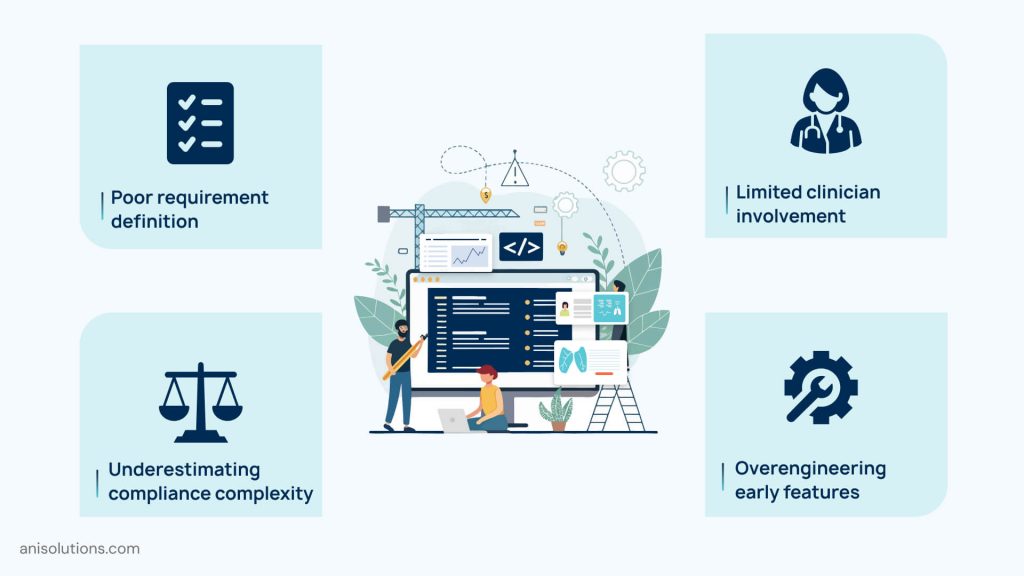
Even well-planned projects can struggle if common mistakes are overlooked. Understanding these pitfalls helps organizations avoid delays, cost overruns, and adoption issues—especially when building an EHR system from scratch.
Here are the most common pitfalls you need to overcome during the EHR software development:
- Poor requirement definition
When requirements are vague or incomplete, development teams make assumptions that may not match real clinical needs. This leads to rework, scope creep, and dissatisfaction. Clear requirements are essential for keeping the EHR system development process focused and efficient.
- Limited clinician involvement
EHRs built without consistent clinician input often fail at the usability level. Clinicians understand real-world workflows better than anyone. Excluding them increases the risk of poor adoption, inefficient documentation, and workarounds that undermine system value.
- Underestimating compliance complexity
HIPAA-compliant EHR system development involves ongoing responsibility, not a one-time checklist. Underestimating regulatory and security requirements for EHR systems exposes organizations to audits, penalties, and operational risk that could have been avoided with early planning.
- Overengineering early features
Adding advanced features too early increases complexity and slows delivery. Early phases should focus on core workflows and stability. Overengineering delays timelines, raises the cost to build an EHR system, and often results in unused functionality.
To better understand the mistakes that commonly disrupt EHR projects and lead to budget overruns or extended timelines, read our blog – Six Most Common Pitfalls in Building an EHR System.
Top 10 EHR Development Mistakes (And How to Avoid Them)
Read HereCost and Timeline Expectations for Building an EHR System
Two of the most common questions asked are what the cost and timeline are while exploring how to build a custom EHR. The answer depends on several interconnected factors. Here are some of the factors that affect cost and timelines for building an EHR systems:
- Key factors that influence development cost
The cost to build an EHR system depends on scope, compliance requirements, number of integrations, deployment model, and development approach. Custom workflows, advanced security, and interoperability requirements for EHR systems all increase complexity and investment.
- Typical timeline ranges explained
How long it takes to build an EHR system varies widely. Smaller, focused systems may take several months, while enterprise-grade platforms can take a year or more. Planning quality, decision speed, and testing rigor all directly influence timelines.
- Why costs and timelines vary across organizations
No two healthcare organizations have identical workflows, compliance needs, or growth plans. These differences explain why EHR system development timelines and costs are rarely comparable across projects. Realistic expectations come from understanding your specific requirements early.
Conclusion: Building an EHR System That Supports Long-Term Growth
In a nutshell, building an EHR system is not about moving fast—it’s about building right. A step-by-step approach grounded in planning, architecture, compliance, security, and prioritization creates systems that clinicians trust and that organizations can scale. When done thoughtfully, the EHR becomes a long-term enabler rather than a recurring problem.
If you’re evaluating how to build an EHR system, following this structured process gives you a clear roadmap—from initial planning to long-term optimization—without unnecessary risk or guesswork. click here to get started with your custom EHR development.
Frequently Asked Questions
Q. How long does the EHR system development lifecycle typically take?
The EHR system development lifecycle usually takes anywhere from 6 to 18 months, depending on scope, complexity, compliance needs, and integrations. Smaller MVPs move faster, while enterprise-grade systems require more planning, testing, and validation.
Q. What are the mandatory HIPAA requirements for EHR software development?
HIPAA requires strong access controls, audit logs, encryption, secure data storage, breach monitoring, and strict user authentication. HIPAA-compliant EHR system development also includes policies, role-based permissions, and safeguards to protect patient data throughout its lifecycle.
Q. What are the biggest security risks when building an EHR system from scratch?
The biggest risks include weak access controls, improper encryption, poor audit logging, insecure integrations, and human error. Ignoring security requirements for EHR systems early often leads to compliance gaps and costly fixes after launch.
Q. Which technologies are commonly used to build a scalable EHR system architecture?
Scalable EHR system architecture often uses cloud platforms, microservices, APIs, modern databases, and containerization. These technologies support performance, flexibility, and growth while making it easier to manage integrations and evolving interoperability requirements.
Q. How can interoperability be ensured in an EHR system using HL7 and FHIR standards?
Interoperability is ensured by designing APIs and data models around HL7 and FHIR standards from the start. This allows structured, secure data exchange with labs, pharmacies, and external systems without building fragile, custom integrations.
Q. Should healthcare organizations choose a cloud-based or on-premise EHR deployment?
Cloud-based EHRs offer better scalability, faster updates, and lower infrastructure overhead, while on-premise systems provide greater control. The right choice depends on compliance needs, internal IT capabilities, budget, and long-term scalability considerations.
Q. What core features should be included in an MVP EHR system?
An MVP EHR should include patient records, clinical documentation, scheduling, basic billing, role-based access, audit logs, and reporting. These core features support daily operations while allowing future enhancements without overengineering early development.
Q. What is the difference between an EMR and an EHR system, and why does it matter during development?
An EMR focuses on internal patient records within one practice, while an EHR supports data sharing across systems and providers. This distinction matters because EHR development requires stronger interoperability, scalability, and compliance planning from the start.
Q. What are the most common challenges healthcare organizations face during EHR implementation?
Common challenges include unclear requirements, limited clinician involvement, resistance to change, training gaps, and underestimated compliance complexity. These issues slow adoption and increase costs, especially when building an EHR system from scratch.
The EHR system development lifecycle usually takes anywhere from 6 to 18 months, depending on scope, complexity, compliance needs, and integrations. Smaller MVPs move faster, while enterprise-grade systems require more planning, testing, and validation.
HIPAA requires strong access controls, audit logs, encryption, secure data storage, breach monitoring, and strict user authentication. HIPAA-compliant EHR system development also includes policies, role-based permissions, and safeguards to protect patient data throughout its lifecycle.
The biggest risks include weak access controls, improper encryption, poor audit logging, insecure integrations, and human error. Ignoring security requirements for EHR systems early often leads to compliance gaps and costly fixes after launch.
Scalable EHR system architecture often uses cloud platforms, microservices, APIs, modern databases, and containerization. These technologies support performance, flexibility, and growth while making it easier to manage integrations and evolving interoperability requirements.
Interoperability is ensured by designing APIs and data models around HL7 and FHIR standards from the start. This allows structured, secure data exchange with labs, pharmacies, and external systems without building fragile, custom integrations.
Cloud-based EHRs offer better scalability, faster updates, and lower infrastructure overhead, while on-premise systems provide greater control. The right choice depends on compliance needs, internal IT capabilities, budget, and long-term scalability considerations.
An MVP EHR should include patient records, clinical documentation, scheduling, basic billing, role-based access, audit logs, and reporting. These core features support daily operations while allowing future enhancements without overengineering early development.
An EMR focuses on internal patient records within one practice, while an EHR supports data sharing across systems and providers. This distinction matters because EHR development requires stronger interoperability, scalability, and compliance planning from the start.
Common challenges include unclear requirements, limited clinician involvement, resistance to change, training gaps, and underestimated compliance complexity. These issues slow adoption and increase costs, especially when building an EHR system from scratch.
- On January 22, 2026
- 0 Comment