Key Stakeholders That Benefit From Custom EHR Development
One crucial fact about developing a custom EHR successfully is that it needs to be aligned with what stakeholders actually want and need. It is not just a technical process but also a collaborative one where each key stakeholder, from clinicians to patients, needs to be involved from step one.
And in 2026, you need to keep this in mind, as many clinics are past the stage where they asked whether they need an EHR. The main focus now will be on whether the system supports the people using it every day.
However, if you do not pay attention to the real-world issues your stakeholders are facing, then the EHR implementation will not work as you need it to work. For instance, one feature that every team, from front-desk to clinicians and patients, needs is interoperability.
But when the EHR fails to provide seamless interoperability, it builds frustration and burnout over time. This is where custom EHR development makes considering the needs of every stakeholder possible, bringing benefits for them while keeping the EHR efficient.
So, in this blog, we will walk you through the key benefits of custom EHRs, stakeholders that benefit from custom EHR, and who benefits from custom EHR systems.
Let’s dive into understanding the value of custom EHR for different stakeholders and the benefits of custom EHR for healthcare organizations.
Download Your Copy of Custom EHR Stakeholder Alignment Checklist
Get NowWhy Custom EHRs Create Organization-Wide Value
Standard EHR platforms are built for averages. They attempt to satisfy as many healthcare organizations as possible with a single design philosophy. While that approach may work on paper, it rarely reflects how healthcare operates on the ground.
Custom EHRs create organization-wide value by adapting workflows, data structures, and user experiences to daily responsibilities. Each role interacts with the same system—but in ways that make sense for their work. Clinicians see streamlined documentation tools. Administrative teams get efficient scheduling and intake. Billing teams receive clean, structured data. Leadership gains meaningful insights without manual reporting.
When every team can work efficiently within one shared platform, adoption improves naturally. Training time drops. Resistance fades. Teams stop creating workarounds. Instead of competing priorities, the organization operates as a connected ecosystem.
This is the real value of custom EHR development: not isolated efficiency gains, but alignment across the entire healthcare organization.
Key Stakeholders That Benefit From Custom EHR Development
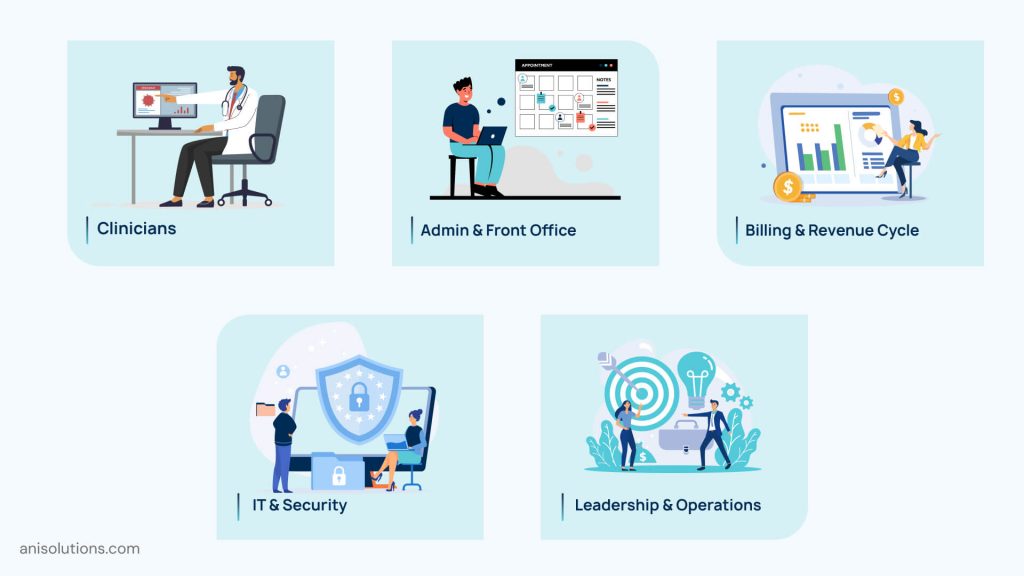
Custom EHR benefits become most visible when viewed through the lens of individual stakeholders. Each group interacts with the system differently, and each gains value in ways that generic platforms rarely support. Here are custom EHR benefits for healthcare stakeholders:
- Clinicians (Physicians, Nurses, Allied Health Staff)
Clinicians are often the most vocal critics of poorly designed EHRs—and for good reason. Documentation-heavy workflows, unnecessary clicks, and rigid templates directly impact care delivery and job satisfaction.
Custom EHRs reduce click fatigue by aligning documentation flows with specialty-specific practices. Templates are designed around real encounters, not generic assumptions. Notes, orders, and clinical tasks follow logical sequences that mirror how clinicians think and work.
Faster documentation doesn’t just save time—it improves focus. When clinicians spend less energy navigating software, they can spend more attention on patients. Usability improves, adoption increases, and burnout risk decreases.
For clinicians, the key benefits of custom EHR systems are clarity, efficiency, and trust in the tools they rely on every day. So, they are one of the most crucial healthcare stakeholders using a custom EHR in the whole clinic.
- Administrative and Front-Office Teams
Front-office teams are the operational backbone of any healthcare organization. Scheduling, registration, patient intake, and daily coordination all begin here. Yet these roles are often forced to work across multiple disconnected systems.
Custom EHR development simplifies these workflows by centralizing scheduling, intake, and eligibility processes into one cohesive experience. Patient information is captured once and flows seamlessly across departments. Manual re-entry and duplicate tasks are eliminated.
Administrative staff also benefit from better visibility into daily operations. Real-time schedules, appointment statuses, and patient flow insights allow teams to anticipate issues before they escalate. The result is smoother operations, fewer delays, and a more consistent patient experience.
- Billing and Revenue Cycle Teams
Billing efficiency depends heavily on the quality of clinical data. When documentation is incomplete, inconsistent, or delayed, revenue cycle teams are forced into reactive mode—fixing errors, chasing clarifications, and dealing with denials.
Custom EHRs improve coding accuracy by structuring clinical data in ways that support billing requirements without disrupting care delivery. Clinical workflows and billing workflows are designed together, not in isolation.
This coordination leads to cleaner claims, faster reimbursements, and fewer revenue leaks. Billing teams spend less time correcting issues and more time optimizing performance.
For revenue cycle teams, the benefits of custom EHR development show up directly in financial stability and predictability.
- IT and Security Teams
From an IT perspective, off-the-shelf EHRs often limit control. Configuration options are restricted. Integrations depend on vendor timelines. Security policies must adapt to system constraints instead of organizational needs.
Custom EHR systems flip that dynamic. IT teams gain greater control over architecture, integrations, and system behavior. APIs, third-party tools, and internal systems can be connected without waiting for vendor approval cycles.
Security teams benefit from clearer enforcement of HIPAA requirements and internal governance policies. Role-based access, audit trails, and data controls are designed into the system from the start.
Reduced dependency on vendor release schedules also means fewer surprises and more predictable system evolution.
- Executive Leadership and Operations
For leadership teams, the EHR is not just a clinical tool—it’s a strategic platform. Decisions about growth, staffing, care models, and investments all depend on accurate, timely data.
Custom EHRs provide clearer insight into organizational performance by aligning reporting with leadership priorities. Dashboards reflect meaningful metrics, not generic data dumps. Leaders can track utilization, outcomes, and operational efficiency without relying on manual reports.
Scalability is another critical benefit. As organizations expand, add locations, or adopt new care models, custom systems evolve alongside them. Ownership and flexibility translate into long-term value rather than recurring reinvestment.
Patients as Indirect but Important Stakeholders
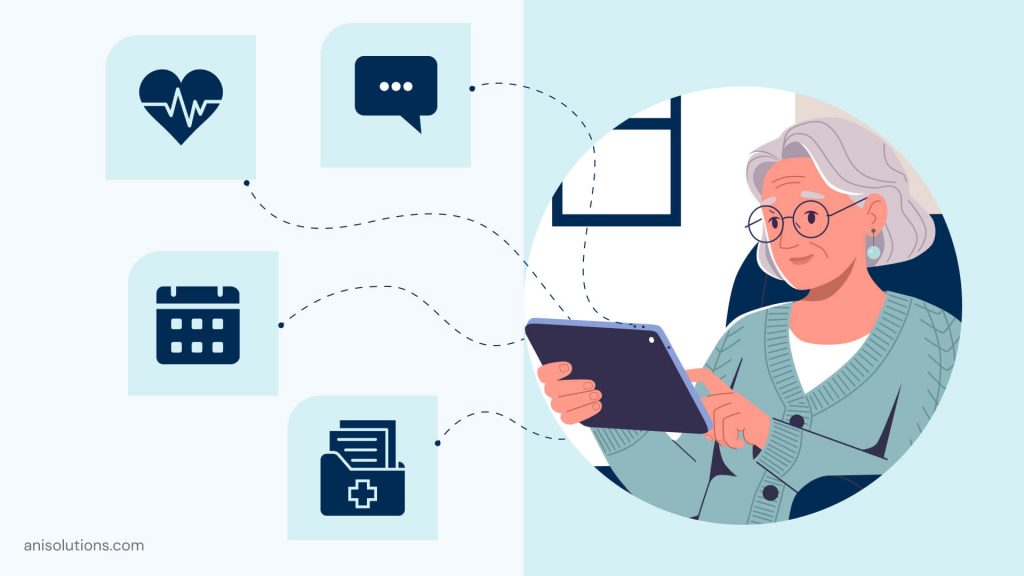
Patients may not interact with backend workflows, but they feel the impact of EHR design every step of their care journey.
Custom EHR systems improve portal usability by simplifying access to records, messaging, and appointment management. Communication becomes clearer and more timely. Care coordination improves as information flows consistently across providers.
Better continuity of care isn’t accidental—it’s the result of systems designed to support collaboration rather than fragmentation. For patients, the benefits of custom EHRs show up as smoother experiences and stronger trust in their care teams.
Build an Intuitive, Connected EHR—Without Costly Rework
Click HereHow Custom EHRs Reduce Cross-Team Friction
One of the most overlooked benefits of custom EHR for healthcare organizations of is friction reduction between teams. In many organizations, departments operate in silos—not by choice, but by system design.
Custom EHRs are built to support multiple roles without compromise. Clinical, administrative, and billing teams work from shared data contexts, eliminating misunderstandings and handoff errors.
Fewer workarounds mean fewer breakdowns. When everyone sees the same accurate information, collaboration improves naturally. Efficiency increases without forcing teams to change how they work.
This alignment turns the EHR into a unifying platform rather than a source of tension.
When Stakeholder-Driven Custom EHR Development Makes Sense
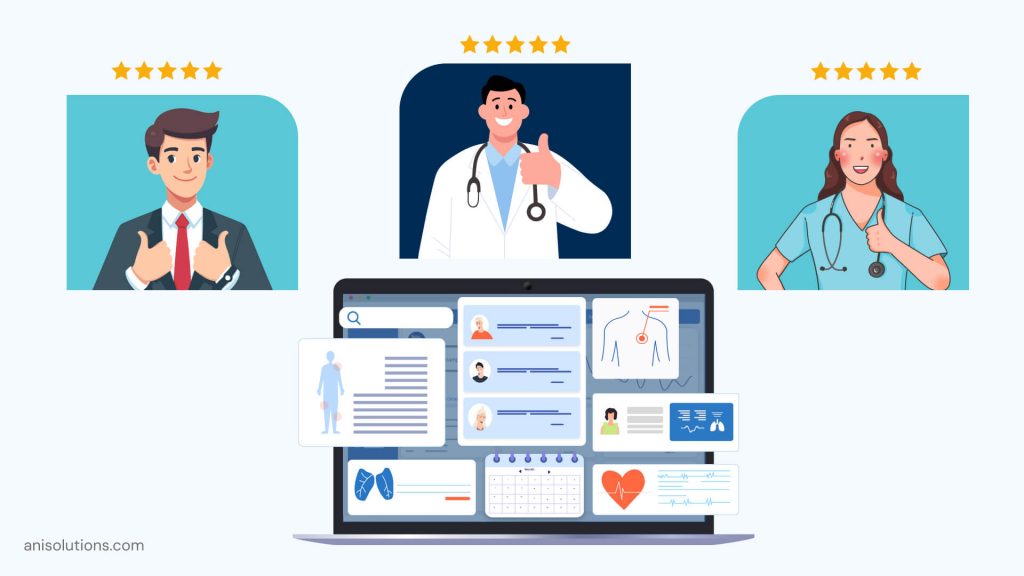
Custom EHR development is not about customization for its own sake. It makes the most sense for organizations with complex realities. There is a unique value of custom EHR for different stakeholders, from clinicians to patients.
Multi-specialty or multi-location healthcare organizations benefit from role-specific workflows that still operate within a unified system. Practices with complex clinical or operational requirements gain flexibility without sacrificing consistency.
Custom EHRs are also valuable when teams struggle with low adoption or resistance to change. When systems reflect real workflows, resistance fades because the software finally supports—not dictates—daily work.
Is Custom EHR Right for Your Organization? Answer a Few Questions and Find Out
Click HereConclusion: Custom EHRs Work Best When Every Stakeholder Wins
In a nutshell, custom EHRs deliver value far beyond clinicians alone. They succeed because they recognize that healthcare is a team effort—one that spans clinical care, operations, billing, IT, leadership, and patient engagement.
Furthermore, adoption improves when systems reflect how teams actually work. Efficiency increases when workflows align instead of colliding. Outcomes improve when everyone operates from shared, reliable data.
The most successful EHRs are not the most feature-rich—they are the most aligned. When every stakeholder wins, the entire healthcare ecosystem moves forward together. So, if you want to develop a custom EHR that aligns with your stakeholders, then click here to book your free demo right now.
Frequently Asked Questions
Q. Who are the key stakeholders that benefit from custom EHR development?
Clinicians, administrative staff, billing teams, IT and security teams, executive leadership, and patients all benefit from custom EHR systems. Each group gains role-specific efficiencies while working within a shared, aligned platform.
Q. Why is stakeholder alignment critical for EHR success in healthcare organizations?
Stakeholder alignment ensures the EHR supports real workflows across departments. When systems reflect how teams actually work, adoption improves, resistance decreases, and the EHR delivers long-term organizational value.
Q. How do clinicians benefit from using a custom EHR system?
Clinicians benefit from faster documentation, reduced click fatigue, specialty-specific templates, and workflows designed around real clinical practice, allowing them to focus more on patient care and less on navigation.
Q. What advantages does a custom EHR offer to administrative and front-office teams?
Custom EHRs streamline scheduling, registration, and intake processes, reduce duplicate data entry, and improve visibility into daily operations, helping front-office teams work more efficiently and proactively.
Q. How does custom EHR development support billing and revenue cycle teams?
Custom EHRs produce cleaner clinical data, improve coordination between care and billing workflows, reduce claim errors, and accelerate reimbursements, resulting in stronger and more predictable revenue cycles.
Q. Why do IT and security teams prefer custom EHR systems?
Custom EHRs give IT teams greater control over configurations and integrations while enabling security teams to enforce HIPAA and internal policies more effectively without relying on vendor release schedules.
Q. How does custom EHR development create value for healthcare leadership and operations teams?
Leadership benefits from clearer performance insights, scalable systems, and long-term platform ownership that supports growth, new care models, and strategic decision-making.
Q. In what ways do patients indirectly benefit from custom EHR systems?
Patients experience better portal usability, improved communication, stronger care coordination, and greater continuity of care as providers operate within a more connected system.
Q. How do custom EHRs reduce friction between clinical, administrative, and billing teams?
By providing shared data context and role-specific workflows within one platform, custom EHRs eliminate workarounds, reduce errors, and improve collaboration across departments.
Q. When does stakeholder-driven custom EHR development make the most sense?
It is most effective for multi-specialty or multi-location organizations, practices with complex workflows, and teams struggling with low EHR adoption or operational inefficiencies.
Clinicians, administrative staff, billing teams, IT and security teams, executive leadership, and patients all benefit from custom EHR systems. Each group gains role-specific efficiencies while working within a shared, aligned platform.
Stakeholder alignment ensures the EHR supports real workflows across departments. When systems reflect how teams actually work, adoption improves, resistance decreases, and the EHR delivers long-term organizational value.
Clinicians benefit from faster documentation, reduced click fatigue, specialty-specific templates, and workflows designed around real clinical practice, allowing them to focus more on patient care and less on navigation.
Custom EHRs streamline scheduling, registration, and intake processes, reduce duplicate data entry, and improve visibility into daily operations, helping front-office teams work more efficiently and proactively.
Custom EHRs produce cleaner clinical data, improve coordination between care and billing workflows, reduce claim errors, and accelerate reimbursements, resulting in stronger and more predictable revenue cycles.
Custom EHRs give IT teams greater control over configurations and integrations while enabling security teams to enforce HIPAA and internal policies more effectively without relying on vendor release schedules.
Leadership benefits from clearer performance insights, scalable systems, and long-term platform ownership that supports growth, new care models, and strategic decision-making.
Patients experience better portal usability, improved communication, stronger care coordination, and greater continuity of care as providers operate within a more connected system.
By providing shared data context and role-specific workflows within one platform, custom EHRs eliminate workarounds, reduce errors, and improve collaboration across departments.
It is most effective for multi-specialty or multi-location organizations, practices with complex workflows, and teams struggling with low EHR adoption or operational inefficiencies.
- On December 22, 2025
- 0 Comment