Modern EHR Software Development: The Complete 2026 Guide
One thing that everyone will agree on is how much healthcare has changed in the last few decades. From the paper-based patient records to the present, a digital system that stores patient details and does much more than that.
But are you wondering why I am looking back suddenly?
Well, because healthcare is advancing again as 2026 is approaching. Till now, most, if not all, providers have used a generic EHR, which has limited providers and held them back rather than helping them.
The EHRs were designed to streamline workflows and provide clinicians with the means to manage their data easily. But generic EHRs completely defeat the purpose and break operations rather than connecting them.
For instance, a behavioral health clinician using a generic EHR needs to click through multiple unnecessary fields just to complete a progress note. This leads to a 15-minute delay in seeing the next patients or finding shortcuts such as copy-pasting data just to save time.
However, now clinicians have realized that modern healthcare cannot function without a personalized and customized EHR system. That’s exactly why providers are now shifting toward custom, next-generation EHR platforms built on AI, cloud-based design, and secure, scalable architecture.
And with 2026, focusing more on Artificial Intelligence, modern EHR software development is entering a new phase. With this, everything from modern EHR architecture 2026 to interoperability in modern EHR systems, scalability in modern EHR platforms, and even HIPAA-compliant EHR development is going to change.
Most importantly, with 2026, the way we develop EHRs is set to change, and you need a complete modern EHR development guide. A complete guide for modern EHR innovation that explains the steps to develop a modern EHR system and how AI will play a role in this.
That’s why I decided to walk you through the future of EHR software, EHR software development trends, and what a guide to develop modern EHR software must include as we move into 2026.
Let’s dive into what’s coming next for AI in EHR development in 2026 and what it means for the next generation of healthcare technology.
The 2026 EHR Landscape: What You Must Know
As we step into 2026, the EHR software is not just limited to being a digital shelf. It’s becoming intelligent, connected, and flexible. This shift is rapidly redefining how we develop EHR, leading towards next-generation EHR platforms built for interoperability, security, and scalability. But before diving into the future of EHR software, let’s first clarify the fundamentals driving this transition:
- EHR vs EHR: A Quick Summary
Before exploring the modern EHR architecture 2026, it helps to understand the key differences between EMRs and EHRs. Because many still confuse these two systems and consider them the same.
To differentiate it simply, an Electronic Medical Record (EMR) is just a digital chart, limited to one practice and focused on basic documentation. Moreover, EMRs were designed for data sharing, multi-provider collaboration, or large-scale integration.
Whereas an Electronic Health Records (EHR), on the other hand, is a comprehensive, interoperable system. These systems easily connect with labs, pharmacies, telehealth, and billing, and enable population-level insights.
Why does this matter for modern EHR software development? Because developers building for 2026 must create systems capable of seamless data exchange, AI-driven workflows, and secure cross-organization interoperability. These are the capabilities that EMRs were never intended to support. And understanding this difference is crucial for anyone in EHR software development today.
Want to understand the difference between EHR vs EMR? Then read our blog ‘EMR vs EHR: Functional Differences Developers Must Understand.’
- What Defines a Modern EHR in 2026
By 2026, a modern EHR will go far beyond digital documentation. It must be cloud-native, fast, secure, flexible, and built to grow with the organization. This is why scalability in modern EHR platforms and HIPAA-compliant EHR development are now foundational requirements rather than optional enhancements.
A true next-generation system starts with FHIR-first, API-first architecture. This ensures seamless interoperability in modern EHR systems— allowing smooth integrations with labs, imaging, RPM devices, third-party apps, and AI tools. Interoperability is no longer a compulsion; it’s the backbone of the future of EHR software.
To support automation, advanced analytics, and intelligent workflows, developers must build AI-ready infrastructure. That includes secure cloud environments, structured data pipelines, microservices-based deployment, and flexible integration layers.
Without this groundwork, healthcare organizations cannot fully leverage AI in EHR development in 2026, whether for automated documentation, predictive analytics, or decision-support tools.
In short, the 2026 EHR ecosystem demands platforms that are:
- Cloud-based and scalable
- Interoperable by design
- Secure and compliant
- AI-ready from the foundation up
This shift is exactly why providers and developers need a complete guide for modern EHR— because building an EHR in 2026 means designing not just for today’s workflows but for tomorrow’s innovation.
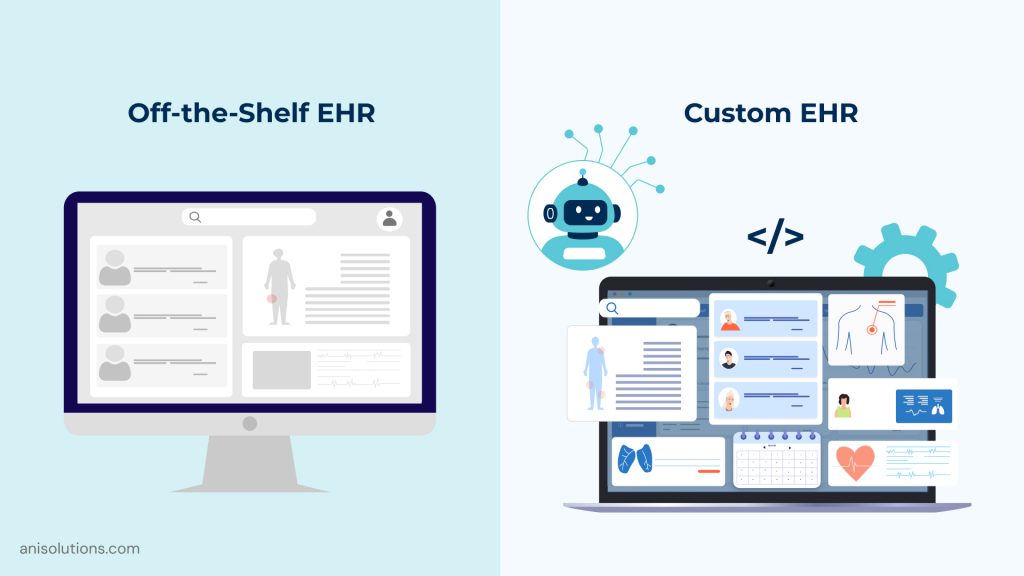
As healthcare enters a more AI-driven and workflow-centric era, providers are finally recognizing a reality they’ve felt for years: generic EHRs were never designed for the way modern clinicians actually work. The shift toward custom EHR software development is no longer about “nice-to-have” features—it’s about creating next-generation systems that align with real clinical workflows, reduce administrative burden, and support smarter, more connected care delivery.
- What Custom EHR Really Means Today
In 2026, a custom EHR is not just a modified template or a few extra modules. It’s a system intentionally designed around the unique workflows of a specialty, practice type, or organization. Whether it’s behavioral health, cardiology, nephrology, or primary care, each specialty operates with different documentation needs, care pathways, reporting metrics, and integration requirements.
A modern custom EHR enables developers to build personalized, provider-centric experiences—from smart documentation templates to role-based dashboards, automated workflows, and tailored alert systems. These platforms are built on modern EHR architecture 2026 principles: API-first design, FHIR compliance, flexible integrations, and AI-ready infrastructure that supports automation and predictive insights.
This shift is redefining what “custom” really means. It’s no longer about adding features; it’s about creating a system that feels intuitive, reduces cognitive load, and adapts to the provider—not the other way around.
For example, there are certain sets of features that can help you build an inclusive or MVP custom EHR, and that is what some % of providers are doing in 2026. This is an increasingly growing pattern in how custom EHR systems are being defined and built in 2026.
Get Your Copy of the EMR Software Development Vendor Checklist
Learn Now- Custom vs. Off-the-Shelf
Off-the-shelf EHRs were built to serve a broad audience, which is exactly why they fall short for many clinicians. Generic systems come with rigid workflows, unnecessary fields, limited configurability, and integration barriers that make it nearly impossible to optimize care delivery. These limitations directly impact efficiency, patient outcomes, and even revenue.
Custom platforms, on the other hand, are designed with scalability in modern EHR platforms, interoperability in modern EHR systems, and true workflow alignment in mind. They integrate smoothly with third-party tools, support specialty-specific logic, and enable automation that generic systems simply cannot match.
That’s why providers across the country are increasingly choosing custom solutions—to reduce documentation time, eliminate workflow friction, and gain a platform that evolves with technology, regulations, and clinical needs. In a year defined by AI transformation, the flexibility and adaptability of custom systems position them as the clear path forward for organizations planning long-term innovation.
However, for many providers, the decision to shift away from off-the-shelf EHRs remains difficult. At this crossroads, the following factors often explain why organizations move toward custom EHR adoption.
How Modern EHR Systems Are Built?
Building a modern EHR in 2026 is nothing like developing traditional healthcare software. Today’s platforms must support AI-driven workflows, cross-system connectivity, real-time data exchange, and compliance from day one. This requires a more structured, strategic, and technology-forward approach to EHR software development, grounded in scalability, interoperability, and secure, cloud-native architecture. Here’s a high-level look at how modern teams bring next-generation EHR platforms to life.
The Development Process
Step 1. Discovery
The process begins with deep clinical workflow analysis. Developers spend time understanding specialty-specific needs, pain points, data flows, documentation requirements, reporting needs, and integration dependencies. This phase is crucial for aligning the product with real-world provider behavior—especially for custom systems.
Step 2. Architecture & Design
Once the requirements are clear, the technical foundation is created. Modern teams adopt modern EHR architecture 2026 principles: cloud-native environments, microservices, FHIR-first data models, and API-first communication layers. This ensures interoperability in modern EHR systems, seamless scalability, and long-term maintainability.
Step 3. Development
Developers then build the core modules—patient records, scheduling, billing, documentation tools, clinical workflows—enhanced with role-based UI, automation features, and specialty templates. This phase also includes creating integration points for labs, pharmacies, telehealth, RPM devices, and third-party systems.
Step 4. Interoperability & Compliance
No modern EHR is complete without strong data exchange capabilities. Teams implement FHIR APIs, HL7 messaging, eRx standards, C-CDA support, and secure integration gateways. At the same time, HIPAA-compliant EHR development practices ensure encryption, access controls, audit logs, and security frameworks are baked into the system.
Step 5. Testing & Deployment
Finally, the platform goes through rigorous testing—functional, interoperability, usability, security, and load testing—to validate performance. Deployment typically uses DevOps pipelines for faster releases and continuous improvements.
AI and Automation in Modern EHRs
What truly sets 2026 EHRs apart is their ability to think, learn, and automate. AI is no longer a futuristic concept; it’s an embedded pillar of modern EHR software development.
1. Predictive Insights
AI models analyze patient histories, vitals, social determinants, and clinical patterns to flag risks early—whether it’s predicting readmissions, identifying gaps in care, or highlighting abnormal trends before they escalate.
2 .Clinical Decision Support (CDS)
Modern EHRs integrate AI-powered recommendations that assist clinicians with diagnosis support, medication checks, dosage suggestions, and evidence-based guidelines. This reduces cognitive load and enhances clinical accuracy.
3. Automated Documentation
AI-driven voice dictation, ambient listening, and intelligent summarization eliminate manual data entry. This not only speeds up documentation but also improves accuracy and reduces burnout—one of the biggest wins of AI in EHR development 2026.
Architecture, Tech Stack & Compliance Essentials
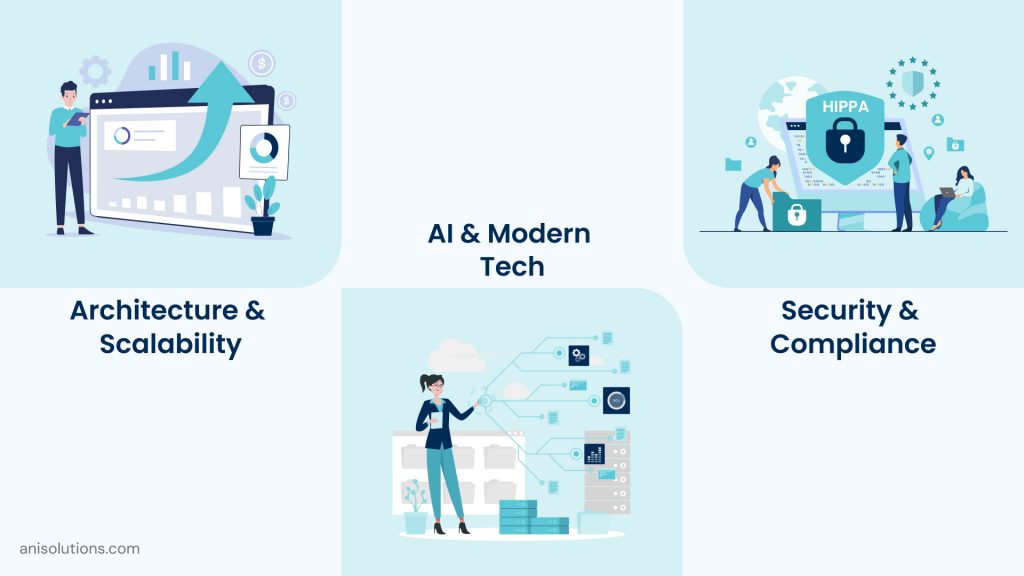
If you want to know how effective a system will be, it all comes down to the architecture beneath it. And as the healthcare clinics grow and new systems and external tools are adopted along with AI-driven workflows, legacy architecture can’t keep up with this.
However, in 2026, the modern EHR architecture demands flexibility, resilience, and security to support long-term innovation without compromising compliance or performance. Here is what you need to build a 2026-ready modern EHR architecture:
- Modern EHR Architecture: Built for Scale & Interoperability
One thing that has changed is that most of the next-generation EHR platforms are now built using microservice-based, cloud-native architecture. Rather than developing a single tightly connected system, this breaks EHR functionality into multiple independent services.
The benefit of doing this is that every service, from billing, patient records, and scheduling, to clinical notes and analytics, can scale individually and evolve independently. Furthermore, a cloud-based infrastructure allows flexibility, automated backups, and faster deployments. This is the crucial point for scalability in modern EHR platforms, especially for organizations with multi-specialty and multi-locality hospitals.
Most importantly, building on this architecture enables seamless interoperability in modern EHR systems. With API-first design and FHIR-first design, you can ensure smooth data exchange with labs, billing systems, imaging centers, telehealth, and RPM devices.
- Recommended Technology Stack
While the exact tech stack will vary as per each organization’s requirements, there are some commonly used technologies that can help you deliver what modern EHR software demands:
- Cloud Platforms: AWS, Azure, or Google Cloud for scalability and reliability.
- Backend Framework: Java (Spring Boot), .NET Core, or Node.js for modular services.
- Frontend: React or Angular for responsive and intuitive interfaces.
- Databases: PostgreSQL, MongoDB, or hybrid models for structured and unstructured data.
- Interoperability Standards: Embed healthcare standards such as HL7, FHIR, C-CDA, and eRx.
- AI Enablement: Secure data pipelines and ML-ready infrastructure for AI in EHR development 2026.
By choosing this stack, you can easily and reliably support the modern EHR software development while continuously upgrading your EHR system without breaking the workflows or system.
- Compliance & Security in Next-Generation EHR Platforms
The most crucial part of this mechanism is the security of EHR and sensitive patient data. Without secure connections, no matter how advanced the architecture is, it remains incomplete. This is where HIPAA-compliant EHR development steps in. Meaning, you need to encrypt all data pipelines end-to-end to keep both at-rest and in-transit data secure.
Modern systems must also align with ONC certification requirements, data blocking rules, and interoperability standards. In addition to this, multi-factor authentication (MFA), detailed audit logs, intrusion detection, and regular security checkups are also standard activities, not optional.
So, in 2026, compliance is not just a final checkpoint, but something to embed from the first day of modern EHR software development. In short, the most successful EHR platforms are the ones that are designed to be secure, auditable, and regulation-ready from day one.
2026-Ready EHR Architecture Checklist: Tech Stack, Scalability & Compliance Essentials
Get NowWho Benefits from Modern EHR Development?
Right now, modern EHR software development is more than just a tech upgrade— it’s a system-wide transformation that impacts everyone involved in care delivery. And in 2026, the EHR platforms are designed to deliver scalability, efficiency, and boost clinician productivity while connecting every system in a single connected ecosystem.
When built thoughtfully, modern EHR software development reduces friction across roles, improves outcomes, and addresses one of healthcare’s biggest challenges: clinician burnout caused by inefficient technology.
Here is how modern EHR development benefits key stakeholders:
| Stakeholder | Key Benefits of Modern EHR Systems |
| Clinicians | Specialty-specific workflows, fewer clicks, AI-assisted documentation, faster charting, real-time clinical decision support, and significantly reduced administrative burden—leading to lower burnout and better focus on patient care. |
| Administrators & Leadership | Real-time operational dashboards, improved reporting accuracy, optimized billing and revenue workflows, better compliance tracking, and visibility across departments for smarter decision-making. |
| IT & Technology Teams | Modular, microservices-based architecture, easier integrations via FHIR and APIs, enhanced system security, scalable infrastructure, simplified maintenance, and future-proofing for AI and new regulations. |
| Patients | Improved care coordination, faster access to health records, smoother communication with care teams, fewer data errors, and a more connected, transparent healthcare experience. |
In 2026, modern EHRs do not focus only on one role; they optimize features for each role, reducing friction and benefiting all stakeholders. But what is the real impact of EHRs across clinical and operational teams? Well, they reduce cognitive loads, and most importantly, they give healthcare staff their pajama time back, increasing job satisfaction.
What is the Total Cost, Timeline & ROI for Modern EHR Development?
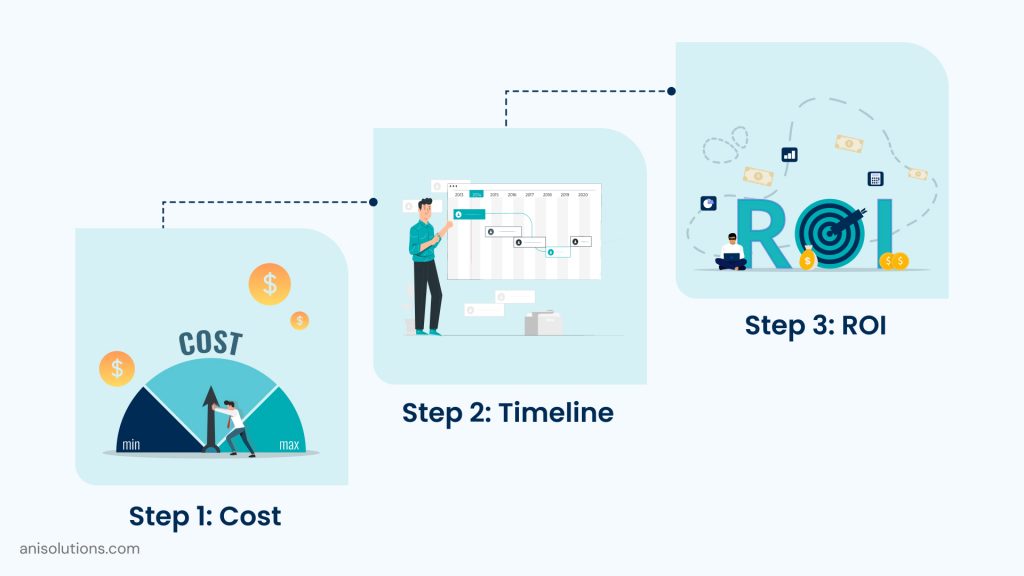
One of the most asked questions about modern EHR software development is cost, timeline, and ROI. And asking this question before diving into the full EHR development process is essential, as it’s a costly affair. So, let’s briefly break down the cost, timeline, and ROI of next-generation EHR platforms:
- Typical Cost Ranges
At a high level, custom EHR development can cost you from $150,000 to $500,000, depending on how complex your project is. If you need fewer features and a simple architecture, then the prices can be much lower. So, if you want specialty workflows, AI capabilities, and compliant EHR development, then price increases.
- High-Level Timeline
Most modern EHR projects are developed within a six to 12-month timeline. The process goes from discovery and architecture, taking four to eight weeks, core development and integration takes three to six months, and testing, compliance validation, and deployment require around two to three months.
This phased approach allows organizations to launch iteratively while minimizing operational disruption.
- Efficiency & Long-Term ROI
The real benefit or ROI comes after launching the EHR. These systems reduce documentation time, eliminate duplication, improve billing accuracy, and streamline workflows. Over time, these gains translate into higher clinician productivity, reduced burnout, fewer errors, and lower IT maintenance costs. The modern EHRs deliver measurable ROI in the long term, outrunning the one-size-fits-all EHRs.
Modern EHR Cost, Timeline & ROI Calculator for Healthcare Organizations
Read HereFuture Outlook: What EHR Will Look Like by 2030
If you ask me what the EHRs will look like by 2030, my answer is they will no longer be limited to just storing data or exchanging it. Even right now, EHRs are becoming AI-first systems that actively guide care, predict risks, and automate routine clinical workflows. This evolution will be enhanced tremendously by 2030 as AI in EHR development progresses further.
- Enhanced Interoperability:
Future EHRs will seamlessly exchange data across providers, devices, payers, and patient-facing applications. Moreover, standards such as FHIR and HL7 mature further, enabling real-time, bidirectional data flow, supporting true coordinated care.
- Predictive Care Pathways:
AI models will analyze longitudinal patient data to suggest personalized care plans, identify potential complications early, and support proactive interventions. Rather than reacting to events, clinicians will be guided toward prevention and early action.
- Greater Personalization & Automation:
EHR interfaces will adapt to individual clinician preferences, specialties, and workflows. Automated documentation, ambient clinical intelligence, and smart alerts will become standard—freeing providers to focus more on patients and less on screens.
By 2030, the future of EHR software will be dependent on intelligence, connectivity, and adaptability— transforming EHRs from administrative tools to active partners in care delivery.
Final Thoughts: Quick Roadmap to Modern EHR Software Development
In a nutshell, as healthcare moves toward 2026, modern EHR development is no longer an option and is more AI-focused than ever before. With the involvement of AI in EHR software development, interoperability demands, and compliance requirements, modern EHR software development is also evolving.
That’s why this roadmap to EHR software development in 2026 makes understanding the changes much easier. So, each subblog in this guide breaks down key aspects of EHR software development from custom EHR strategy, EMR vs EHR differences, stakeholder benefits, and implementation insights.
So, if you are having issues with developing a compatible and evolving EHR, then stay tuned. You can also click here to contact our team and book your free demo today.
Frequently Asked Questions
Q. What defines a modern EHR system in 2026?
A modern EHR in 2026 is cloud-based, interoperable, scalable, and AI-ready. It’s designed around real clinical workflows, integrates easily with third-party systems, and reduces documentation burden while improving care coordination.
Q. How is AI transforming the way EHR systems are built and used?
AI is enabling predictive insights, automated documentation, and clinical decision support within EHRs. It reduces manual data entry, highlights risks earlier, and helps clinicians make faster, more informed decisions at the point of care.
Q. What core features should every modern EHR platform include?
Every modern EHR should include specialty-specific workflows, AI-assisted documentation, real-time interoperability, secure patient portals, customizable dashboards, role-based access, audit trails, and built-in compliance and reporting capabilities.
Q. Why are healthcare providers shifting from off-the-shelf to custom EHR systems?
Providers are moving to custom EHRs because generic systems force inefficient workflows. Custom platforms align with specialty needs, integrate better with existing tools, reduce clicks, improve usability, and scale as clinical and regulatory demands evolve.
Q. What are the main steps involved in developing a modern EHR?
Modern EHR development typically includes workflow discovery, architecture design, feature development, interoperability and compliance implementation, rigorous testing, and phased deployment—ensuring the system is secure, scalable, and aligned with real clinical operations.
Q. What technologies and architecture are recommended for building future-ready EHRs?
Future-ready EHRs use cloud-native, microservices-based architecture with FHIR-first APIs. Common technologies include secure cloud platforms, modern frontend frameworks, flexible databases, and AI-ready data pipelines for automation and analytics.
Q. How important is interoperability (FHIR/HL7) in modern EHR development?
Interoperability is critical in modern EHR development. Standards like FHIR and HL7 enable seamless data exchange across providers, labs, pharmacies, and digital health tools—supporting coordinated care, compliance, and long-term system scalability.
Q. What compliance and security standards must an EHR meet in 2026?
EHRs in 2026 must meet HIPAA and ONC requirements, support data-sharing mandates, and include encryption, role-based access, multi-factor authentication, audit logs, and continuous security monitoring to protect sensitive patient data.
Q. How much does it cost to develop a custom modern EHR?
The cost of developing a custom modern EHR typically ranges from $150,000 to $500,000 or more, depending on complexity, integrations, AI features, compliance requirements, and the level of customization needed.
Q. Who benefits the most from implementing a modern EHR system?
Clinicians benefit from reduced burnout and faster documentation, administrators gain better visibility and control, IT teams get scalable and secure systems, and patients experience improved coordination, access, and overall quality of care.
A modern EHR in 2026 is cloud-based, interoperable, scalable, and AI-ready. It’s designed around real clinical workflows, integrates easily with third-party systems, and reduces documentation burden while improving care coordination.
AI is enabling predictive insights, automated documentation, and clinical decision support within EHRs. It reduces manual data entry, highlights risks earlier, and helps clinicians make faster, more informed decisions at the point of care.
Every modern EHR should include specialty-specific workflows, AI-assisted documentation, real-time interoperability, secure patient portals, customizable dashboards, role-based access, audit trails, and built-in compliance and reporting capabilities.
Providers are moving to custom EHRs because generic systems force inefficient workflows. Custom platforms align with specialty needs, integrate better with existing tools, reduce clicks, improve usability, and scale as clinical and regulatory demands evolve.
Modern EHR development typically includes workflow discovery, architecture design, feature development, interoperability and compliance implementation, rigorous testing, and phased deployment—ensuring the system is secure, scalable, and aligned with real clinical operations.
Future-ready EHRs use cloud-native, microservices-based architecture with FHIR-first APIs. Common technologies include secure cloud platforms, modern frontend frameworks, flexible databases, and AI-ready data pipelines for automation and analytics.
Interoperability is critical in modern EHR development. Standards like FHIR and HL7 enable seamless data exchange across providers, labs, pharmacies, and digital health tools—supporting coordinated care, compliance, and long-term system scalability.
EHRs in 2026 must meet HIPAA and ONC requirements, support data-sharing mandates, and include encryption, role-based access, multi-factor authentication, audit logs, and continuous security monitoring to protect sensitive patient data.
The cost of developing a custom modern EHR typically ranges from $150,000 to $500,000 or more, depending on complexity, integrations, AI features, compliance requirements, and the level of customization needed.
- On December 16, 2025
- 0 Comment