A&I Custom EMR for Dermatology: Lesion Tracking System
How A&I Solutions helped a multi-location dermatology practice monitor lesion progression, standardize skin cancer documentation, and improve follow-up care with a custom EMR platform.
Contact Us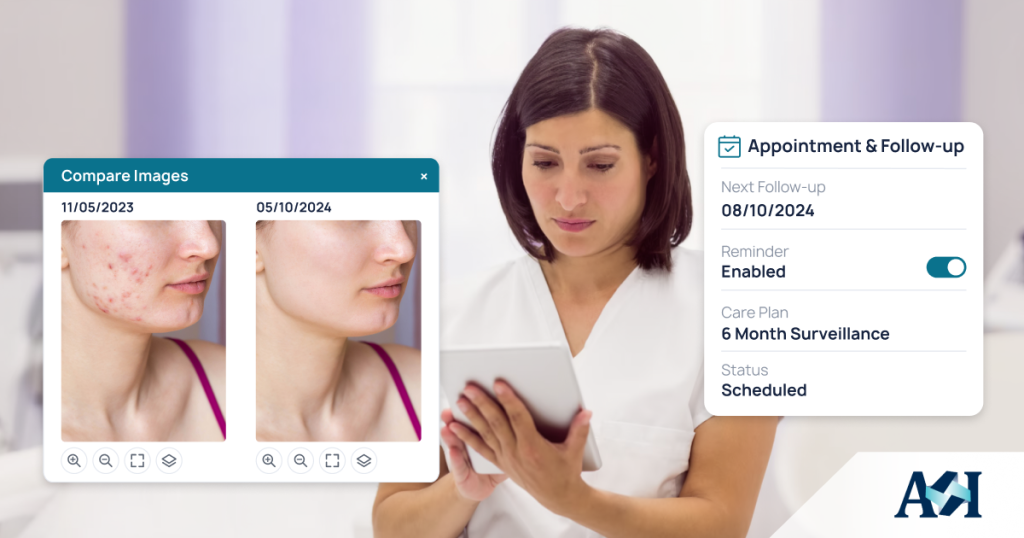
Modernizing dermatology documentation with visual lesion tracking
The client is a U.S.-based dermatology group operating eight outpatient clinics specializing in general dermatology, skin cancer screening, cosmetic procedures, and Mohs surgery. Providers documented lesions using free-text notes and photographs stored in separate applications, making it difficult to compare lesion progression across patient visits.
Without a centralized visual history, clinicians spent valuable appointment time locating previous images, confirming lesion locations, and manually documenting changes. To improve diagnostic confidence and clinical efficiency, the client partnered with A&I Solutions to build a specialty-focused custom EMR with integrated lesion tracking, clinical imaging, and longitudinal documentation.
Improving longitudinal dermatology workflows
The Challenge
- Clinical photographs were stored outside the EMR, making comparisons across visits difficult.
- Lesion documentation varied between providers, creating inconsistent patient records.
- Follow-up appointments for suspicious lesions were manually tracked, increasing the risk of delayed care.
Our Solution
- Built a visual lesion tracking system directly into the EMR.
- Standardized dermatology templates with body mapping and structured documentation.
- Automated follow-up reminders and surveillance workflows for high-risk patients.
Cloud-based dermatology imaging and documentation platform
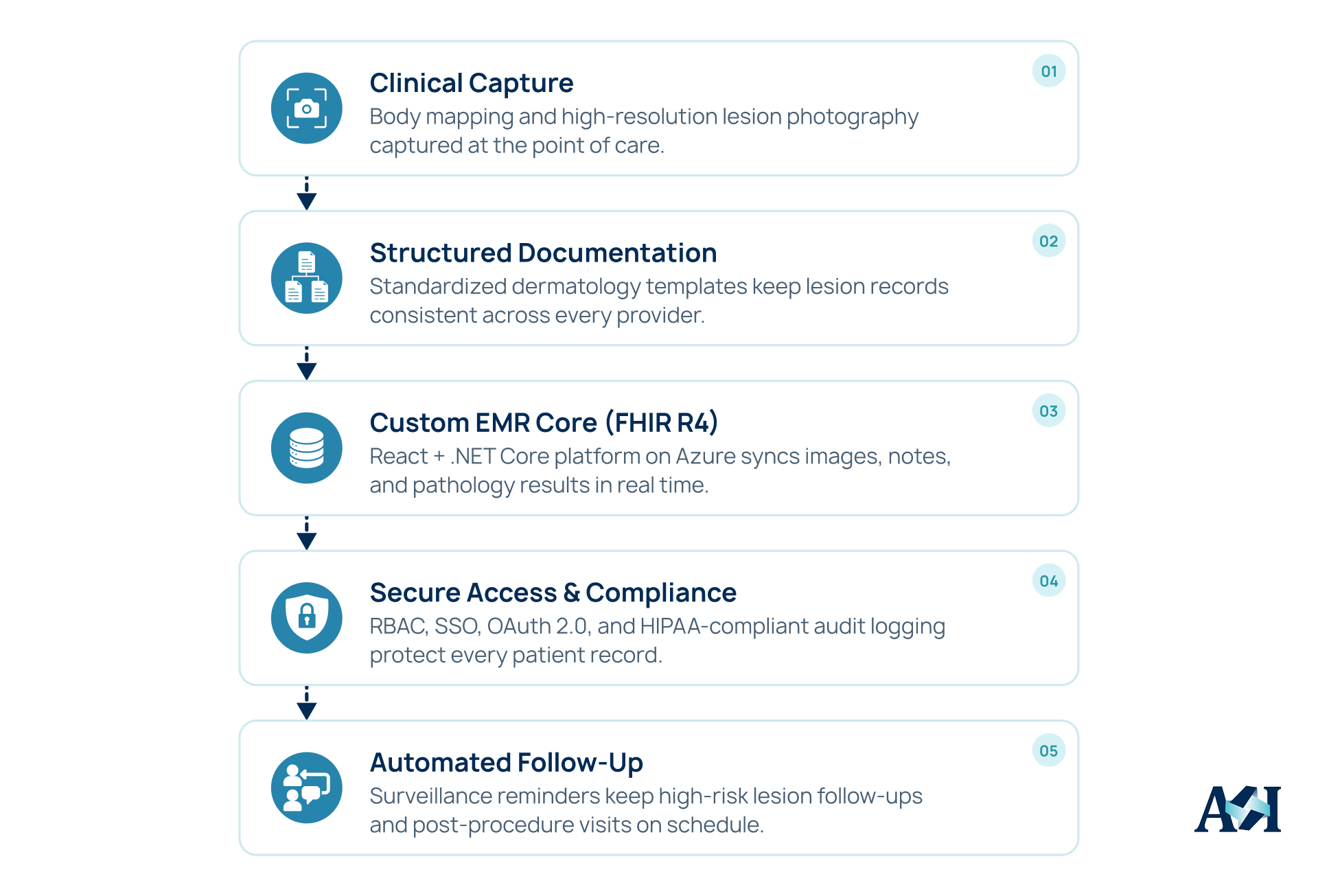
A&I Solutions developed a secure Azure-hosted platform using React, .NET Core, Azure Blob Storage, FHIR R4 APIs, SMART on FHIR, OAuth 2.0, Single Sign-On (SSO), Role-Based Access Control (RBAC), and HIPAA-compliant audit logging. Clinical photographs, annotations, pathology results, and encounter documentation synchronized in real time, providing dermatologists with a complete longitudinal patient record.
Custom EMR built for dermatology workflows
A&I Solutions developed a specialty-focused custom EMR that centralized lesion documentation, clinical imaging, pathology reporting, and patient follow-up into a single workflow. Dermatologists could compare lesion progression across multiple visits, document findings using structured templates, and access historical images without leaving the patient chart. Through the A&I custom EHR platform, this implementation demonstrates how custom EMR development can improve diagnostic consistency, provider efficiency, and continuity of dermatology care.
1. Intelligent lesion tracking
The platform simplified dermatology documentation by combining clinical imaging with structured lesion records.
- Interactive body mapping
- Side-by-side historical image comparison
- Structured lesion measurements
- Integrated pathology documentation
2. Connected dermatology workflows
The solution streamlined specialty care from initial evaluation through long-term surveillance.
Standardized dermatology templates improved documentation consistency across providers.
Automated reminders ensured timely monitoring of suspicious lesions and post-procedure visits.
High-resolution photographs were securely linked to each lesion for longitudinal comparison.
Microsoft Azure, SMART on FHIR, OAuth 2.0, Role-Based Access Control (RBAC), Single Sign-On (SSO), encrypted image storage, and HIPAA-compliant audit logging protected patient information.
Measurable outcomes after implementation
Image documentation accuracy
Centralized lesion mapping and standardized documentation significantly improved the consistency of clinical image records across all providers.
Less manual image retrieval
Providers accessed previous lesion photographs directly from the patient chart, reducing time spent searching across disconnected systems.
Higher follow-up compliance
Automated surveillance reminders improved patient adherence to recommended follow-up visits for suspicious lesions and ongoing skin cancer monitoring.