A&I Solutions EHR for Urgent Care: 12-Minute Avg Visit
How A&I Solutions built a custom EHR for urgent care that streamlined walk-in intake, accelerated clinical documentation, and gave staff real-time visibility into patient flow.
Contact Us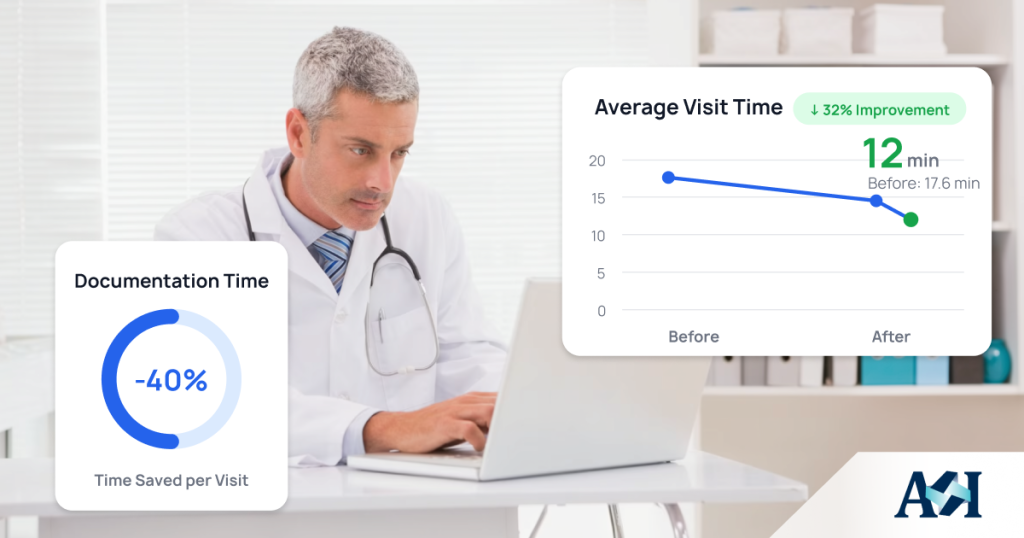
A custom EHR designed around urgent care speed
The client is a U.S.-based urgent care network providing high-volume, walk-in acute care across multiple centers. Its general-purpose EHR was designed for scheduled ambulatory care and created bottlenecks in registration, documentation, and patient flow management.
A&I Solutions developed a custom EHR for urgent care with streamlined registration, rapid clinical documentation, and real-time patient flow visibility. The goal was to reduce visit time while helping staff manage high patient volumes without compromising care quality.
Aligning EHR workflows with walk-in care
The Challenges
- Slow intake and registration
Multi-step registration delayed the start of walk-in visits and limited front-desk throughput during peak periods.
- Documentation slowed providers
The existing workflows were not optimized for urgent care and lacked rapid templates for common presentations.
- No real-time patient flow visibility
Staff could not easily identify waiting-room bottlenecks or balance patient loads across providers and rooms.
The Solutions
- Streamlined urgent care intake
Digital and self-service intake reduced data-entry steps and accelerated registration.
- Rapid clinical documentation
Click-efficient templates, fast order entry, and streamlined disposition workflows helped providers document visits faster.
- Real-time flow management
A live patient-flow view allowed staff to identify bottlenecks, monitor provider and room loads, and manage throughput proactively.
Real-time architecture for high-volume urgent care
A&I Solutions deployed the EHR on Microsoft Azure using React, .NET Core, Azure SQL, FHIR R4, HL7 v2.x, SMART on FHIR, Azure API Management, OAuth 2.0, RBAC, and SSO.
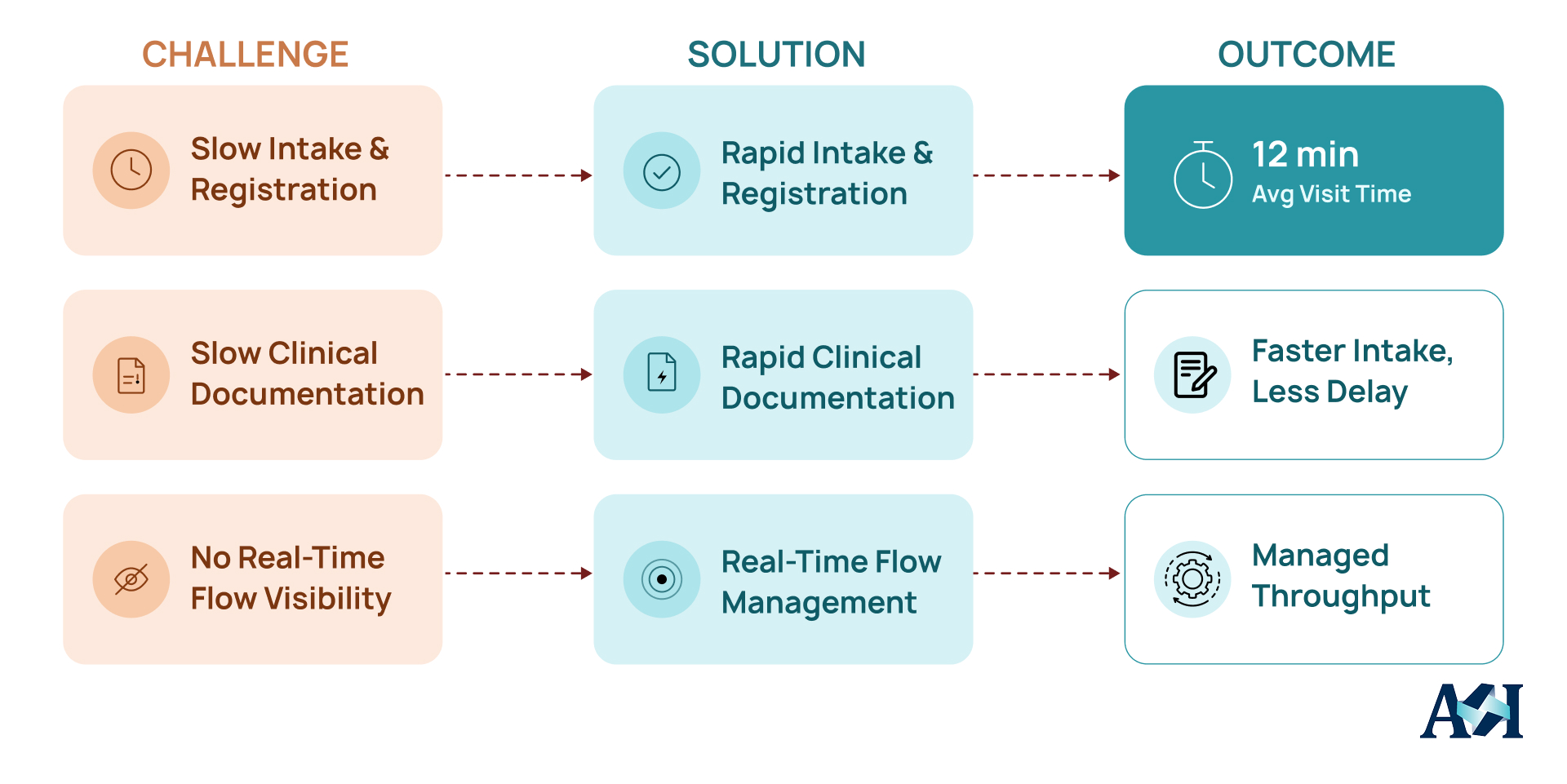
The workflow diagram maps each operational problem to its corresponding EHR capability: slow intake → rapid intake, slow documentation → rapid clinical documentation, and limited visibility → real-time flow management. The resulting workflow connects these capabilities directly to faster visits and managed throughput.
The platform also included SSO, RBAC, OAuth 2.0 authentication, HIPAA-compliant audit logging, and encrypted data storage and transmission to protect patient information across the urgent care network.
Custom EHR development for faster urgent care workflows
A&I Solutions built a custom EHR around the specific operational requirements of walk-in urgent care. Instead of adapting scheduled-care workflows to a high-volume environment, the platform was structured around rapid registration, efficient documentation, and continuous patient-flow visibility.
The A&I Solutions EHR outcomes demonstrate how custom EHR development can align an EHR with specialty-specific operational requirements, helping urgent care teams move patients through the visit more efficiently.
1. Rapid Intake and Patient Flow Management
A&I Solutions redesigned the front-end of the urgent care visit to reduce unnecessary registration steps and improve visibility into patient movement. The platform included:
- Streamlined walk-in registration
- Digital and self-service intake
- Minimized data-entry steps
- Fast registration during peak volume
- Live patient status visibility
- Bottleneck identification
- Provider and room load visibility
- Proactive throughput management
The combination of faster intake and real-time flow visibility helped staff identify congestion earlier and manage patient movement throughout busy periods.
2. Rapid Clinical Documentation
The clinical documentation workflow was redesigned specifically for the pace of urgent care. The platform included:
- Rapid templates for common urgent care presentations
- Click-efficient documentation
- Fast order entry
- Streamlined disposition workflows
- Documentation workflows designed around shorter visits
By reducing unnecessary documentation steps, providers could complete charts more efficiently while maintaining the information required for the encounter.